
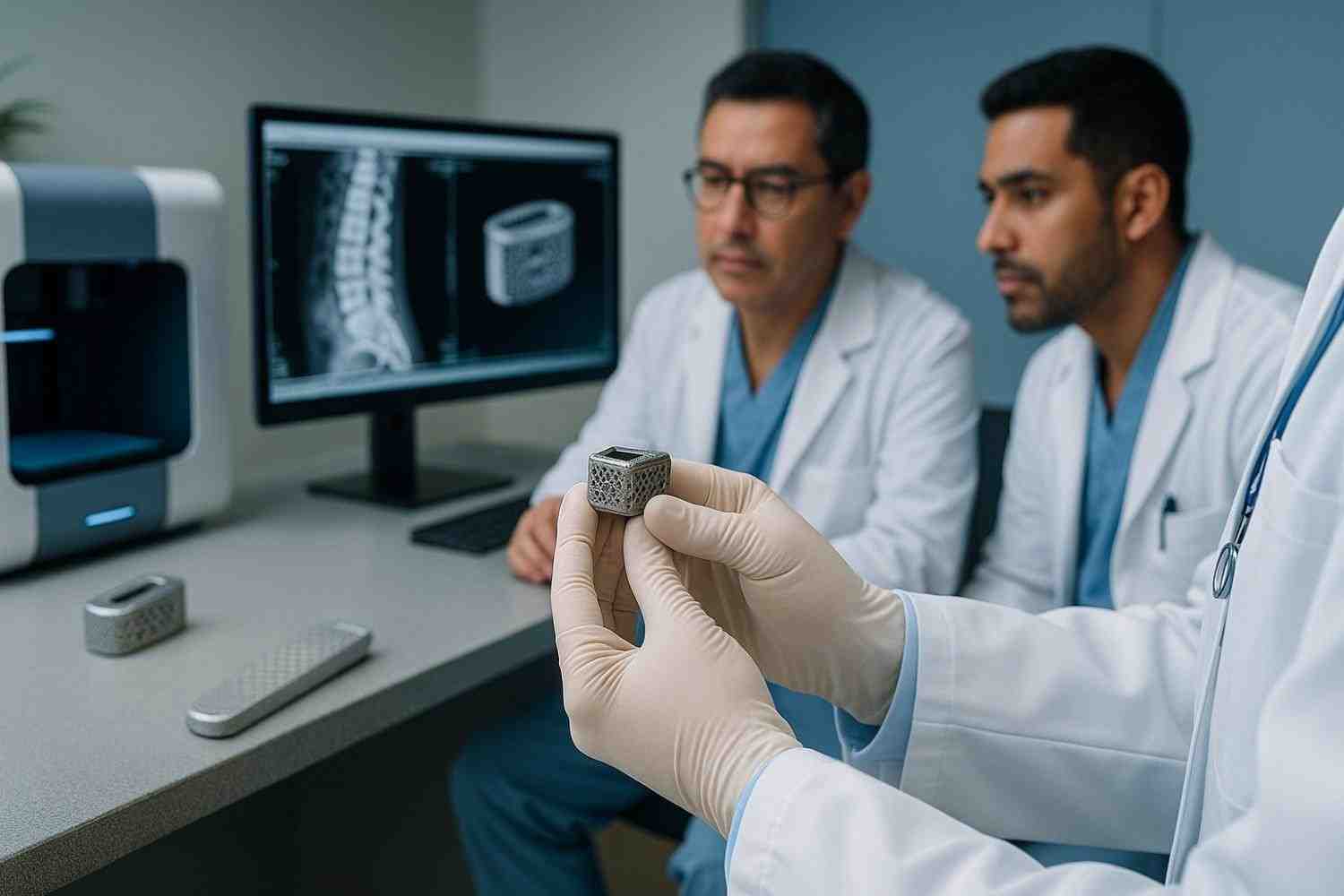
3D-Printed Spinal Implants: Custom Solutions for Complex Cases
3D-Printed Spinal Implants: Custom Solutions for Complex Cases
Spinal surgery has traditionally relied on standardized, mass-produced implants designed to fit the "average" patient—an approach that often requires surgeons to compromise between available sizes and individual patient anatomy. Enter 3D printing technology, also known as additive manufacturing, which is revolutionizing spinal surgery by enabling creation of patient-specific implants precisely matched to each individual's unique spinal anatomy. At Pain Management Laredo, we're watching this technology transform outcomes for Laredo, TX and Webb County patients with complex spinal conditions, offering custom titanium implants that improve fusion rates, reduce complications, and accelerate recovery compared to traditional off-the-shelf devices.
Understanding 3D Printing Technology in Medicine
Additive manufacturing represents a fundamental shift from traditional subtractive manufacturing in creating medical devices:
3D Printing Process for Spinal Implants
- Patient Imaging: High-resolution CT or MRI scans capture detailed three-dimensional anatomy of the patient's spine, including bone structure, curvature, deformities, and pathology requiring surgical correction.
- Digital Design: Specialized software converts imaging data into precise three-dimensional models, allowing surgeons and engineers to design implants perfectly matched to the patient's anatomy down to sub-millimeter precision.
- Surgical Planning: Virtual surgery simulation enables surgeons to plan the procedure in advance, testing different approaches, optimizing implant positioning, and identifying potential complications before the actual operation.
- Additive Manufacturing: Industrial 3D printers build implants layer by layer from biocompatible materials—typically titanium alloy powder—using laser sintering or electron beam melting to fuse each microscopic layer.
- Surface Texturing: Advanced printing techniques create porous surface structures that promote bone ingrowth (osseointegration), improving biological fixation compared to smooth traditional implants.
- Sterilization and Quality Control: Finished implants undergo rigorous testing and medical-grade sterilization before surgical implantation, ensuring they meet FDA standards for safety and performance.
Materials Used in 3D-Printed Spinal Implants
- Titanium Alloy (Ti6Al4V): The most common material, offering excellent biocompatibility, strength-to-weight ratio, corrosion resistance, and MRI compatibility—properties essential for long-term spinal implants.
- Titanium with Porous Architecture: 3D printing enables creation of lattice structures with controlled porosity mimicking natural bone, promoting bone ingrowth while reducing implant weight and stress shielding.
- PEEK (Polyetheretherketone): High-performance polymer increasingly used in 3D-printed spinal cages, offering radiolucency (doesn't block X-rays, allowing better post-operative imaging) and elastic modulus closer to natural bone.
- Bioresorbable Materials: Experimental implants using materials that gradually dissolve as bone heals, eliminating the need for permanent foreign bodies—still in research phases for spinal applications.
- Composite Materials: Emerging multi-material printing combines different materials within single implant (e.g., titanium core with PEEK outer layer), optimizing mechanical and biological properties.
Clinical Applications in Spinal Surgery
3D-printed implants are transforming treatment of complex spinal conditions across multiple surgical contexts:
Degenerative Spine Conditions
- Custom Interbody Fusion Cages: Patient-specific spinal fusion cages perfectly match disc space height, lordotic angle, and endplate contours, improving contact with vertebral bone and increasing fusion success rates compared to standard sizes.
- Multilevel Fusions: For patients requiring fusion of multiple spinal segments, custom implants account for each level's unique anatomy, which varies significantly along the spine from cervical through lumbar regions.
- Revision Surgery: When previous spinal surgery has altered anatomy or failed, 3D-printed implants can be designed to work with existing hardware or fill irregular bone defects that standard implants cannot accommodate.
- Minimally Invasive Applications: Custom implants can be designed for specific minimally invasive surgical approaches, reducing soft tissue trauma while achieving optimal spinal reconstruction.
Spinal Deformity Correction
- Scoliosis Surgery: Patients with severe spinal curvature benefit from implants designed to correct specific deformity patterns, accounting for rotational components and individual vertebral morphology that standard implants cannot address.
- Kyphotic Deformity: For abnormal forward curvature of the spine, custom implants restore appropriate spinal alignment by incorporating precise angular corrections into their geometry.
- Pediatric Deformity: Growing children with spinal deformities require specialized implants that can be customized to smaller anatomy while planning for future growth or staged procedures.
- Adult Degenerative Scoliosis: Older Laredo patients developing spinal curvature from asymmetric disc degeneration benefit from implants addressing both deformity correction and age-related changes like osteoporosis.
Spinal Tumors and Trauma
- Tumor Resection Reconstruction: After surgical removal of spinal tumors requiring vertebral body resection, 3D-printed implants can replace large segments of spine with custom prostheses matching the exact dimensions of resected bone.
- Trauma Reconstruction: Severe spinal fractures from motor vehicle accidents common in South Texas, particularly on Highway 35 and I-35, may require custom implants when standard trauma hardware cannot adequately stabilize complex fracture patterns.
- Infection Treatment: Spinal infections requiring extensive debridement of infected bone leave irregular defects that custom 3D-printed spacers can precisely fill, restoring spinal alignment and stability.
- Metastatic Disease: Cancer patients with spinal metastases requiring palliative stabilization surgery benefit from rapid production of custom implants that can be manufactured within days as cancer treatment timelines demand.
Advantages Over Traditional Implants
Patient-specific 3D-printed spinal implants offer numerous benefits compared to conventional off-the-shelf devices:
Surgical and Clinical Benefits
- Perfect Anatomical Fit: Custom implants eliminate compromises between available sizes and patient anatomy, ensuring optimal contact with bone surfaces and reducing risk of subsidence (implant sinking into vertebral bone).
- Improved Fusion Rates: Studies show 3D-printed implants with porous surfaces achieve higher fusion rates (90-95% vs. 80-85% for standard implants) due to enhanced osseointegration and optimized load distribution.
- Reduced Operative Time: Pre-operative planning and perfectly sized implants reduce intraoperative trial-and-error selecting implant sizes, potentially decreasing anesthesia time and associated complications—particularly important for elderly Laredo patients.
- Lower Complication Rates: Better fit reduces mechanical complications like implant migration, adjacent segment degeneration, and hardware failure requiring revision surgery.
- Complex Case Solutions: Patients previously considered inoperable due to severe deformity, previous surgeries, or unusual anatomy can now receive surgical treatment with custom-designed solutions.
- Minimally Invasive Compatibility: Implants can be designed for specific surgical approaches including lateral, anterior, or posterior techniques, optimizing minimally invasive procedures for faster recovery.
Biological and Long-Term Benefits
- Enhanced Osseointegration: Porous lattice structures created through 3D printing promote bone ingrowth throughout the implant, achieving biological fixation superior to smooth-surfaced traditional implants requiring only mechanical fixation.
- Reduced Stress Shielding: Elastic modulus can be tuned by adjusting porosity, better matching natural bone stiffness and reducing stress shielding that causes bone loss around overly rigid solid metal implants.
- Improved Nutrient Flow: Interconnected pores within 3D-printed structures allow blood vessel ingrowth and nutrient transport, supporting ongoing bone health around the implant.
- Reduced Inflammatory Response: Better biomechanical match reduces micromotion at the bone-implant interface, decreasing inflammatory responses that can impair fusion and cause chronic pain.
- Durability: Titanium alloy implants are designed for lifetime use, and osseointegration achieved with porous 3D-printed surfaces provides exceptional long-term stability without loosening common with older implant designs.
The Design and Manufacturing Process
Creating a patient-specific spinal implant involves sophisticated collaboration between surgeons, engineers, and regulatory compliance:
Pre-Operative Planning Phase
- Imaging Acquisition: High-resolution CT scans (typically 1mm or finer slice thickness) capture detailed spinal anatomy; MRI may supplement for soft tissue assessment and surgical planning.
- 3D Reconstruction: Specialized medical imaging software converts 2D scan slices into precise three-dimensional digital models of vertebrae, discs, and surrounding structures.
- Virtual Osteotomy and Correction: For deformity cases, software allows surgeons to perform virtual bone cuts and corrections, determining optimal implant geometry to achieve desired spinal alignment.
- Implant Design: Biomedical engineers work with surgeons to design implant geometry, including dimensions, lordotic/kyphotic angles, screw trajectories, porous zones for bone ingrowth, and features for surgical insertion.
- Biomechanical Testing: Computer simulations using finite element analysis predict how the implant will distribute loads during physiological movements, ensuring structural integrity under expected stresses.
- Surgical Guide Creation: Patient-specific surgical guides can be simultaneously designed to assist with precise implant positioning during surgery, increasing accuracy beyond manual freehand techniques.
Manufacturing and Validation
- Additive Manufacturing: Industrial metal 3D printers build implants layer by layer (typically 30-100 micron layer thickness) over 8-48 hours depending on implant size and complexity.
- Post-Processing: Finished prints undergo support structure removal, stress relief heat treatment, surface finishing, and sometimes additional treatments to optimize pore structure or apply bioactive coatings.
- Quality Control: Each implant undergoes dimensional verification (laser scanning to confirm match to design specifications), material testing (ensuring appropriate titanium alloy properties), and non-destructive testing (X-ray inspection for internal defects).
- Sterilization and Packaging: Medical-grade sterilization (typically autoclave or gamma irradiation) prepares implants for surgical use while maintaining material properties and packaging ensures sterility until surgery.
- Timeline: From imaging to sterile implant delivery typically requires 2-6 weeks, depending on complexity; emergency cases can be expedited to as little as 1-2 weeks when needed.
Current Limitations and Challenges
Despite remarkable advantages, 3D-printed spinal implants face several limitations that affect accessibility and appropriate use:
Cost and Insurance Considerations
- Higher Upfront Costs: Custom implants typically cost $5,000-$15,000 more than standard implants, reflecting design time, specialized manufacturing, and patient-specific nature—a significant consideration for Laredo patients managing healthcare budgets.
- Insurance Coverage Variability: While many insurers cover 3D-printed implants for complex cases, some require extensive prior authorization demonstrating medical necessity over standard implants, creating administrative burdens and potential coverage denials.
- Cost-Effectiveness Debate: Long-term cost-effectiveness remains under study; if custom implants reduce revision surgery rates (each revision costing $50,000-$150,000), they may ultimately save money despite higher initial costs.
- Reimbursement Challenges: Current CPT coding doesn't always adequately account for surgeon time in pre-operative planning and custom design consultation, potentially discouraging adoption despite clinical benefits.
Regulatory and Clinical Limitations
- FDA Regulatory Pathways: Custom implants must follow 361(h) custom device exemption pathway requiring physician oversight and patient-specific justification, limiting ability to create libraries of pre-designed implants for common anatomies.
- Long-Term Outcome Data: While short to mid-term outcomes (2-5 years) are excellent, 10-20 year data on 3D-printed spinal implants is still accumulating, leaving some uncertainty about ultra-long-term performance.
- Revision Surgery Complexity: If a patient with custom 3D-printed implant requires revision surgery years later, managing interfaces between custom and standard hardware can be complex, potentially requiring additional custom components.
- Surgeon Training Requirements: Effective use requires surgeons to develop skills in pre-operative planning software, implant design collaboration, and understanding biomechanical principles beyond traditional surgical training.
- Not Universally Superior: For straightforward single-level degenerative cases in patients with normal anatomy, standard implants work excellently; custom implants provide greatest benefit in complex cases rather than routine surgeries.
Access and Availability in Laredo, Texas
For Laredo and Webb County patients considering spinal surgery, understanding access to 3D-printed implant technology is important:
Current Access Pathways
- Regional Referral Centers: Major medical centers in San Antonio, Houston, and Austin have established 3D spinal implant programs with dedicated engineering teams and surgeon expertise—within driving distance for most South Texas patients.
- Complex Case Consultation: Pain Management Laredo can facilitate consultation with spine surgeons experienced in 3D-printed implants for patients with complex spinal conditions who might benefit from this technology.
- Case-by-Case Evaluation: Not all spinal surgery requires custom implants; surgeons will recommend 3D-printed technology when patient-specific anatomy, deformity severity, or previous surgery makes standard implants inadequate.
- Insurance Navigation: We assist Laredo patients with insurance authorization processes, helping document medical necessity for custom implants when recommended by spine surgery consultants.
- Local Surgical Development: As technology matures and becomes more accessible, local hospitals may develop 3D spinal implant capabilities, bringing this innovation closer to home for Webb County residents.
Who Might Benefit Most
- Severe Spinal Deformity: Patients with significant scoliosis, kyphosis, or multi-planar deformities where standard implants cannot achieve adequate correction or fit properly.
- Revision Surgery Candidates: Individuals requiring repeat spinal surgery after previous operations altered anatomy or left bone defects that standard revision implants cannot address.
- Tumor or Trauma Cases: Patients needing reconstruction after large tumor resection or severe traumatic injury where substantial portions of vertebrae must be replaced.
- Anatomical Variations: People with congenital spinal variations, transitional anatomy (e.g., sacralization), or unusual bone structure where off-the-shelf implants don't fit appropriately.
- Failed Conservative Care: Patients who've exhausted non-surgical options including Pain Management Laredo's comprehensive interventional treatments and require surgery for definitive treatment.
Future Directions in 3D Spinal Implant Technology
The field continues to advance rapidly with several promising developments on the horizon:
Emerging Technologies
- Bioactive Implant Surfaces: Incorporating growth factors, antibiotics, or osteoconductive materials directly into 3D-printed implants to enhance fusion, prevent infection, or accelerate healing.
- Multi-Material Printing: Next-generation printers capable of combining multiple materials in single print job could create implants with varying properties (rigid core, compliant outer layer, bioabsorbable sections) optimized for each region.
- Artificial Intelligence Design: Machine learning algorithms analyzing thousands of cases to automatically generate optimal implant designs based on patient imaging, potentially reducing design time and improving outcomes.
- In-Office Printing: Smaller, more affordable 3D printers may eventually allow some implants to be manufactured in hospital settings, reducing cost and turnaround time for urgent cases.
- Bioresorbable Spinal Implants: Materials that gradually dissolve as bone heals could eliminate permanent foreign bodies, particularly promising for younger patients and trauma cases where lifetime implants are undesirable.
- Smart Implants: Integration of sensors into 3D-printed implants could monitor fusion progress, detect loosening, or measure spinal loads, providing real-time data to optimize post-operative rehabilitation.
Expanding Applications
- Broader Indication Acceptance: As evidence accumulates and costs decrease, 3D-printed implants may become standard for increasingly routine spinal procedures beyond only the most complex cases.
- Pediatric Applications: Growth-accommodating implants that can be lengthened without repeat surgery (using magnetically controlled mechanisms combined with custom 3D geometry) could transform treatment of children with scoliosis.
- Cervical Spine Expansion: While current applications focus on lumbar and thoracic spine, cervical (neck) spine is seeing increased custom implant use for complex cases involving cervical deformity or tumor.
- Outpatient Procedures: Miniaturized custom implants designed for minimally invasive approaches may enable some spinal fusion procedures to transition from multi-day hospitalizations to same-day surgeries, reducing cost and recovery time.
Pain Management Laredo's Integrated Approach
Our approach to spinal conditions incorporates awareness of cutting-edge surgical innovations while emphasizing comprehensive conservative care:
Conservative Treatment First
- Interventional Pain Procedures: Most Laredo patients with spinal pain achieve substantial relief with epidural steroid injections, facet joint procedures, radiofrequency ablation, or spinal cord stimulation—avoiding surgery entirely.
- Physical Therapy Integration: Targeted rehabilitation strengthening core muscles, improving spinal mechanics, and reducing pain often eliminates or delays surgical need, sometimes indefinitely.
- Medication Management: Evidence-based pain medication strategies including non-opioid options manage symptoms while other treatments work or determine if surgical consultation is truly needed.
- Lifestyle Optimization: Weight management, ergonomic modifications, smoking cessation, and activity pacing reduce spinal stress and may prevent progression requiring surgery.
When Surgery Is Indicated
- Appropriate Referrals: When conservative treatments are exhausted or patients have neurological deficits requiring surgical intervention, we facilitate referral to experienced spine surgeons including those with 3D implant expertise.
- Technology Matching: We help identify which patients might benefit most from custom 3D-printed implants versus those for whom standard implants are appropriate—avoiding unnecessary complexity and cost.
- Coordinated Care: Pain Management Laredo maintains communication with surgical teams before and after procedures, ensuring comprehensive pain management throughout the surgical journey.
- Post-Surgical Support: After spinal surgery with any implant type, we provide ongoing pain management, monitor healing, and address any persistent post-operative pain with interventional techniques if needed.
3D-printed spinal implants represent a genuine revolution in spine surgery—transforming complex cases from inoperable to successfully treated and improving outcomes even for routine surgeries through personalized medicine. This technology embodies the future of healthcare: precision treatments designed for each individual's unique biology rather than one-size-fits-all approaches. For Laredo patients facing complex spinal conditions, custom implants offer hope for better outcomes with fewer complications and faster recovery.
While 3D-printed implants are typically reserved for complex cases and surgery itself should always be a last resort after conservative treatments, this technology ensures that when surgery is necessary, it can be optimized to each patient's individual anatomy. Pain Management Laredo stays current on these innovations and works collaboratively with surgical specialists to ensure our Laredo and Webb County patients access the most appropriate, advanced treatments when spinal conditions require surgical intervention.
If you're experiencing chronic spinal pain in Laredo—whether from degenerative disc disease, spinal stenosis, deformity, or previous surgery—contact Pain Management Laredo for comprehensive evaluation. We provide expert conservative care with interventional procedures that help most patients avoid surgery while maintaining relationships with advanced spine surgery centers for the minority who require surgical consultation, including access to 3D-printed implant technology when appropriate.