Overcoming Cancer Treatment Pain: A Survivor's Integrative Approach
Rosa's Journey: Reclaiming Life After Cancer in Laredo
Rosa Martinez, a 55-year-old retired teacher and grandmother of six, completed her last chemotherapy infusion at a cancer center in South Texas nearly three years ago. By most clinical measures, her breast cancer treatment had succeeded—imaging showed no evidence of disease, and her oncologists declared her in remission. Yet Rosa found herself facing a paradox common among cancer survivors in Laredo and throughout Webb County: now that the cancer was gone, the pain from treatment remained, affecting her ability to enjoy the healthy life she had fought so hard to reclaim.
"People kept saying, 'Congratulations, you're cancer-free,' and I wanted to celebrate," Rosa recalls, speaking Spanish during our conversation in her comfortable home in north Laredo. "But nobody warned me about the pain that would continue after treatment ended. I was still taking pain medication, still limited in my activities, still not able to be the grandmother my family needed in South Texas." Her experience is increasingly common as more cancer survivors in Webb County recognize that survivorship involves addressing not just the cancer itself but the physical and psychological aftermath of intensive treatment.
Understanding Cancer Treatment Pain in the Context of South Texas Survivorship
Types and Causes of Cancer Treatment Pain
Cancer-related pain doesn't begin and end with the disease itself. For patients like Rosa treated in Laredo's medical centers, pain can result from multiple sources: the cancer itself (which in her case had caused bone pain before diagnosis), the intensive treatments used to fight the cancer (chemotherapy, radiation, surgery), and the long-term effects of treatment on the nervous system and tissues. Rosa's specific pain pattern included:
- Chemotherapy-induced peripheral neuropathy (CIPN): Nerve damage in her hands and feet from the chemotherapy drugs administered during her treatment in South Texas, causing burning, tingling, and numbness
- Post-surgical pain syndrome: Chronic pain related to her mastectomy performed at a Laredo surgical center, including chest wall pain and referred shoulder pain
- Lymphedema-related pain: Swelling and pain in her arm following lymph node removal during her surgery in Webb County
- Radiation-related tissue changes: Pain from fibrosis and tissue tightness in her chest wall following radiation therapy received at a South Texas cancer center
This multifaceted pain pattern is typical for breast cancer survivors in Laredo. "My oncology team had managed the cancer brilliantly," Rosa acknowledges. "But post-treatment pain management wasn't their specialty. I was left with pain medication and no clear pathway to recovery."
The Gap in Cancer Survivorship Care in Laredo
A significant gap exists in cancer survivorship care throughout South Texas and Laredo specifically. Oncologists excel at eliminating cancer but often have limited expertise in addressing the chronic pain and functional limitations that persist after treatment. "My oncologist in Laredo would say, 'These things will improve over time,' or 'You're fortunate to be alive,'" Rosa recalls. "Both things were true, but they didn't address my current pain and inability to function."
This survivorship care gap particularly affects patients in underserved South Texas communities like Laredo, where access to specialized cancer rehabilitation and pain management resources may be limited. Rosa, fortunate to have both good insurance and professional background understanding health systems, began researching comprehensive survivorship care options in Webb County and beyond. "I realized that cancer survivors in Laredo needed integrated care from people trained in both cancer-related issues and pain management," she notes. "That's a specialized niche, but it exists."
Building an Integrative Survivorship Care Plan
Finding Specialized Cancer Rehabilitation Resources
Rosa's turning point came when she connected with a cancer rehabilitation specialist at a medical center in San Antonio (about 150 miles from Laredo) who works specifically with cancer survivors. "This provider understood that my pain wasn't just random chronic pain—it was directly related to my cancer treatment," she explains. "That context changed everything about treatment planning." While this provider was outside Webb County, Rosa's oncologist in Laredo coordinated care, creating a system where specialized expertise combined with local resources.
Her integrated survivorship care plan, developed collaboratively between her Laredo oncology team and specialized cancer rehabilitation providers in South Texas, addressed multiple components simultaneously:
- Comprehensive pain assessment identifying specific pain generators and mechanisms related to her cancer treatment
- Specialized physical therapy focusing on post-surgical rehabilitation, lymphedema management, and functional restoration
- Desensitization techniques specifically designed for chemotherapy-induced neuropathy
- Medication optimization choosing agents particularly appropriate for cancer survivors
- Psychological support addressing the emotional aspects of survivorship and chronic pain
- Nutritional counseling using dietary approaches supported by cancer survivorship research
- Return-to-activity planning helping Rosa progressively resume meaningful activities in Laredo
Comprehensive Assessment of Pain Mechanisms
The first step in Rosa's care involved detailed assessment of what was actually causing her pain. "I'd been treated for 'cancer pain' generically," she recalls. "But my pain specialists in San Antonio and Laredo systematically identified each source. The chest wall pain came from surgical scar tissue. The neuropathy came from chemotherapy. The arm pain came from lymphedema. These needed different treatments."
This mechanistic understanding shaped every aspect of Rosa's subsequent treatment. Rather than generic pain management, providers in Laredo and South Texas tailored interventions to specific pain mechanisms. "It's like the difference between treating 'leg pain' versus treating 'knee arthritis with referred pain' versus treating 'a torn ligament,'" she explains. "Once you know what's actually causing the pain, you can treat it specifically."
Specific Treatment Approaches in Rosa's Recovery
Addressing Chemotherapy-Induced Peripheral Neuropathy
The burning, tingling pain in Rosa's hands and feet from chemotherapy-induced peripheral neuropathy (CIPN) represented one of her most disabling symptoms. This form of nerve pain can persist for years after chemotherapy completion and creates significant functional limitation, particularly affecting South Texas patients who enjoy outdoor activities in Laredo's warm climate.
Rosa's CIPN treatment combined multiple approaches specifically designed for this condition:
- Specialized physical therapy: Graded motor imagery and desensitization techniques where she progressively retrained her nervous system to interpret sensations from her hands and feet appropriately
- Gabapentin optimization: Her pain management doctor in Laredo carefully titrated gabapentin specifically for CIPN, using doses and timing designed for neuropathic pain rather than other indications
- Topical treatments: Compounded topical analgesics and specialized creams applied to her hands and feet, providing targeted relief without systemic medication side effects
- Alpha-lipoic acid supplementation: Evidence-based nutritional approach with research support specifically in cancer survivors with neuropathy
- Activity modification: Adjusting activities in Laredo to accommodate neuropathic symptoms while maintaining meaningful engagement
"Within six months of this multi-pronged approach, my neuropathy pain had decreased by about 60 percent," Rosa notes. "More importantly, the character of the pain changed from sharp and burning to manageable tingling. My hand function improved significantly."
Post-Surgical Pain Syndrome Management
Rosa's mastectomy scar, performed nearly three years before we spoke, was still producing significant pain and functional limitation. "I couldn't raise my arm fully, couldn't lie on my right side, couldn't carry things with my right arm," she recalls. "This was tissue that had healed over two years before—but it was never treated properly for the chronic pain it was causing."
Specialized treatment for her post-surgical pain syndrome in Laredo included:
- Scar tissue mobilization: Soft tissue manipulation techniques performed by her physical therapist specifically designed to break up adhesions in scar tissue and improve tissue mobility
- Targeted steroid injection: An injection administered by ultrasound guidance directly into the scar tissue region, reducing inflammation in tissue that remained problematic years after surgery
- Gradual movement restoration: Progressive exercises restoring range of motion and functional capability that surgical trauma and subsequent scar formation had limited
- Proper ergonomics: Adjustments to how Rosa positioned herself during activities in Laredo, preventing aggravation of the post-surgical region
This scar-focused approach, distinct from generic pain management, produced results. "Within three months, I could raise my arm fully again," Rosa reports. "The chest wall pain decreased substantially. I could sleep on my right side. Small things that meant enormous amounts to me in terms of function."
Lymphedema Management and Associated Pain
Lymphedema—swelling of the arm following lymph node removal during Rosa's surgery in Webb County—contributed to her pain, functional limitation, and emotional distress. "I was embarrassed by my swollen arm," she admits. "In our culture, appearance matters. I was wearing loose clothing, avoiding social situations, trying to hide a normal consequence of my cancer treatment."
Specialized lymphedema management through a certified lymphedema therapist in Laredo included:
- Manual lymphatic drainage techniques that gently move fluid toward functioning lymph nodes
- Compression garments fitted specifically to Rosa's arm, designed to maintain lymphatic clearance
- Exercise program specifically designed to promote lymphatic circulation without overloading compromised lymphatic systems
- Skin care protocols preventing infection that could exacerbate lymphedema in Laredo's warm climate
- Activity modification strategies maintaining function while respecting lymphedema limitations
"Within a year of proper lymphedema management, my arm swelling decreased by about 50 percent," Rosa notes. "More importantly, I understood it was manageable. I could control it through therapy and self-care rather than accepting it as permanent disfigurement."
Medication Optimization for Cancer Survivors
Strategic Approach to Pain Medications After Cancer Treatment
Rosa's medication regimen evolved significantly as she progressed through her survivorship. "I started on opioids during my cancer treatment, which made sense for acute pain," she explains. "But after treatment ended, I was on similar opioid doses for what should have been manageable pain. I wanted to reduce medication, not maintain it forever."
Her pain management specialist in Laredo implemented a strategic approach to medication optimization specifically for cancer survivors:
- Opioid tapering: Gradual reduction of opioid doses as her pain-specific interventions reduced underlying pain generators
- Strategic non-opioid optimization: Addition of gabapentin, duloxetine, and topical agents specifically chosen for their evidence in cancer-related pain
- Consideration of cancer-specific factors: Awareness that some medications (certain NSAIDs, for instance) have specific interactions or concerns for cancer survivors that standard pain patients may not have
- Supplement integration: Addition of evidence-based supplements like alpha-lipoic acid and tumeric with anti-inflammatory properties supported in cancer survivor literature
- Careful monitoring: Regular follow-up and dosing adjustment ensuring Rosa remained on minimal medication necessary for functional pain control
"Over two years, I went from taking opioids four times daily plus multiple other medications to taking minimal opioids and focusing on other approaches," Rosa notes with satisfaction. "My mind is clearer, my energy is better, and I'm functioning at a level I hadn't achieved since before my cancer diagnosis."
Psychological and Emotional Aspects of Survivorship
Addressing the Emotional Complexity of Cancer Survival
While physical pain management was crucial, Rosa's integrative approach in Laredo also addressed the profound psychological aspects of cancer survivorship. "People don't appreciate that cancer survivors are often dealing with trauma, fear of recurrence, grief over what we've lost, and identity shifts," she explains. "I wasn't just a person with chronic pain—I was a cancer survivor with all the emotional complexity that involves."
Her psychological support included:
- Therapy specifically designed for cancer survivors addressing trauma and PTSD-like symptoms
- Pain psychology work addressing how emotional and cognitive factors affect pain perception and function
- Support groups with other cancer survivors in the Laredo area where she could share experiences and strategies
- Mindfulness and acceptance-based approaches helping her live well despite residual pain and health concerns
- Family involvement when appropriate, helping loved ones understand survivorship pain and how to support Rosa appropriately
"The most powerful work I did was learning that I could be a cancer survivor with some ongoing pain and still have an excellent quality of life," Rosa reflects. "That shift from 'I must eliminate all pain' to 'I can thrive while coexisting with some residual symptoms' was transformative."
Return to Meaningful Activity and Current Life
Progressive Return to Activities Important to Rosa
Rosa's functional restoration followed a carefully structured progression. Initially, her pain specialists in Laredo identified activities most important to her quality of life: spending time with her grandchildren, attending church in her Laredo parish, and helping with family events throughout Webb County. These became the targets around which her recovery was organized.
"Rather than generic 'return to normal,' we focused on returning to what mattered to Rosa," her pain specialist in South Texas explains. "That made recovery feel purposeful rather than like endless rehabilitation."
Her progression included:
- Month 1-3: Capable of short visits with grandchildren (30-45 minutes without pain escalation)
- Month 3-6: Able to attend family gatherings and church with minimal pain interruption
- Month 6-12: Capable of active participation with grandchildren—playing, cooking, teaching
- Month 12-24: Return to nearly all activities she enjoyed before cancer, with minor modifications for ongoing symptoms
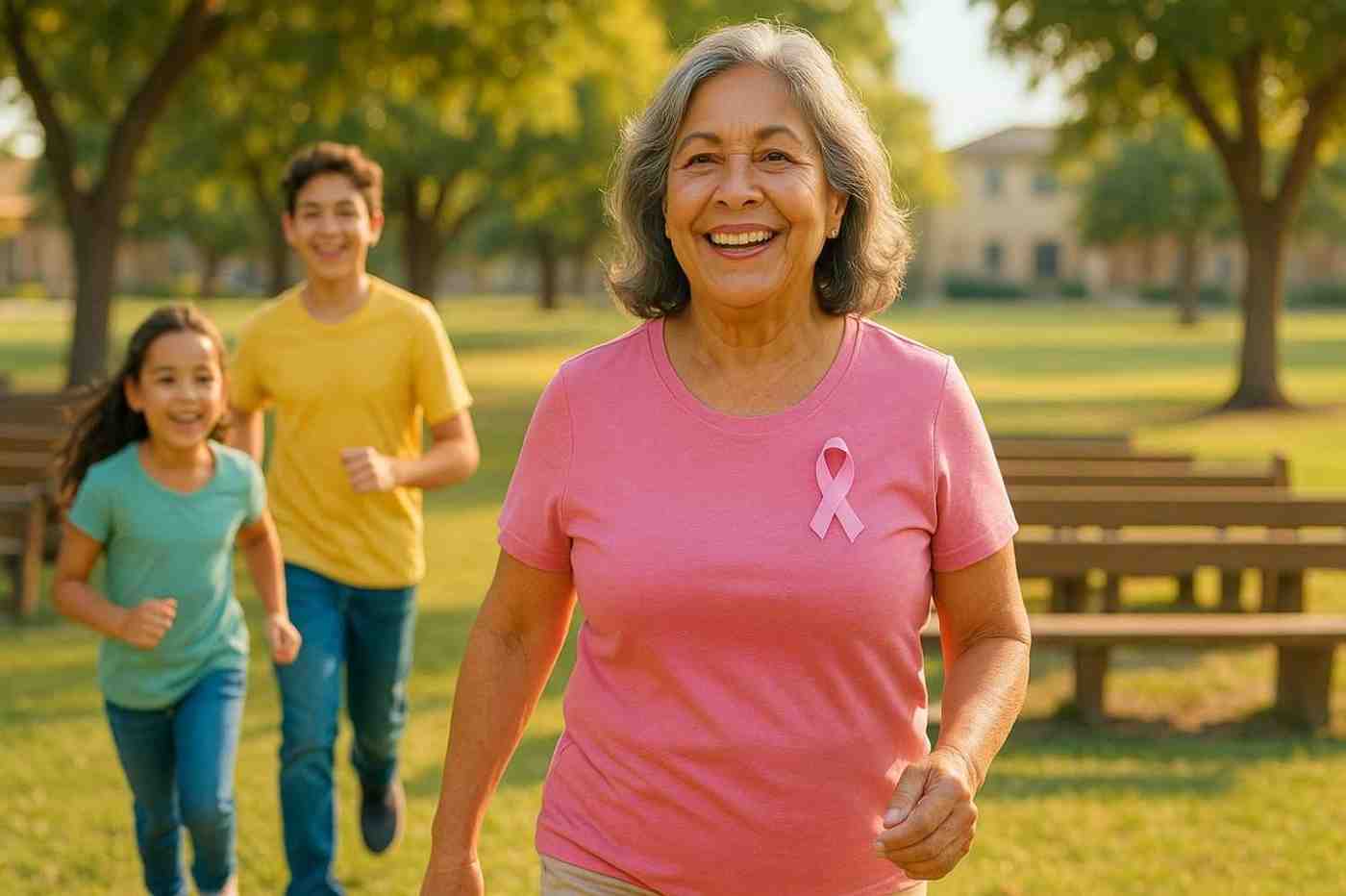
"Now, nearly three years from completing my cancer treatment, I'm doing nearly everything I did before," Rosa notes. "I can spend full days with my grandchildren. I can cook for large family gatherings. I can volunteer at my church in Laredo. I have my life back—truly back, not just existing."
Ongoing Maintenance and Long-Term Management
Rosa's current routine reflects well-integrated survivorship care in Laredo and Webb County:
- Regular oncology follow-up every six months at her cancer center in South Texas to monitor for recurrence
- Quarterly pain management visits in Laredo focused on medication adjustment and monitoring for any pain component changes
- Monthly physical therapy sessions maintaining the gains achieved during intensive rehabilitation
- Ongoing home exercise program and activity modifications that prevent exacerbation of her residual neuropathy
- Annual nutrition consultation reviewing her diet for cancer-protective and anti-inflammatory properties
- Continued participation in cancer survivor support groups in Laredo, providing both community and monitoring for emerging survivorship issues
"My residual neuropathy probably won't completely resolve—some chemotherapy-related nerve damage is permanent," Rosa acknowledges. "But I've gone from a pain level of 8/10 that was limiting every activity to a baseline of 2-3/10 that doesn't significantly affect my life. That's genuine recovery."
Key Insights for Cancer Survivors in Webb County and South Texas
Rosa's comprehensive survivorship journey offers valuable guidance for the growing population of cancer survivors in Laredo and throughout Webb County:
- Survivorship pain is real and treatable: Just because cancer is gone doesn't mean pain treatment should end; often it should evolve and intensify at this phase
- Mechanistic understanding changes treatment: Generic pain management is less effective than understanding specifically what structures are causing pain from cancer treatment
- Multidisciplinary approach is essential: Oncologists, pain specialists, physical therapists, psychologists, and nutritionists provide different expertise necessary for comprehensive survivorship
- Medication reduction is often possible: Rather than accepting long-term high-dose pain medication, targeted treatment often allows meaningful medication reduction
- Return to meaningful activity is the goal: Organizing recovery around what matters personally to each patient in Laredo provides motivation and relevance beyond abstract functional improvements
- Emotional aspects are as important as physical aspects: Cancer survivorship involves psychological trauma and identity shifts requiring professional support alongside physical rehabilitation
- Integrated care requires intentional coordination: In Laredo and Webb County, survivors must sometimes become their own care coordinators, ensuring oncology, pain management, rehabilitation, and psychological support communicate effectively
- Long-term management differs from acute treatment: Cancer survivor pain often requires permanent lifestyle modifications and maintenance rather than eventual complete resolution
For cancer survivors in Laredo and throughout South Texas still struggling with pain after completing treatment, Rosa's message is encouraging: "Your pain is valid, and it's treatable. It took time and coordination across multiple specialists in Laredo and South Texas, but I truly reclaimed my life. You can too. Don't accept that chronic pain is just the price of surviving cancer. Work with specialists who understand cancer-related pain, stay persistent, and remember that your goal is not perfection—it's the best possible life given your current situation. For me in Laredo, that's turned out to be a genuinely wonderful life."