PRP Therapy in Laredo for Musculoskeletal Healing
How PRP Therapy Laredo Is Accelerating Musculoskeletal Healing
Platelet-rich plasma therapy uses concentrated growth factors from your own blood to accelerate tissue repair. For patients searching for PRP therapy Laredo options while dealing with tendon injuries, joint degeneration, or chronic musculoskeletal pain, PRP offers a non-surgical option supported by a growing body of clinical research — and it's available locally, without a drive to San Antonio or Houston.
If you've been told surgery is your only option, or you're looking for an alternative to long-term opioid use, PRP therapy may be worth a serious conversation with a board-certified specialist.
What PRP Therapy Actually Does Inside Your Body
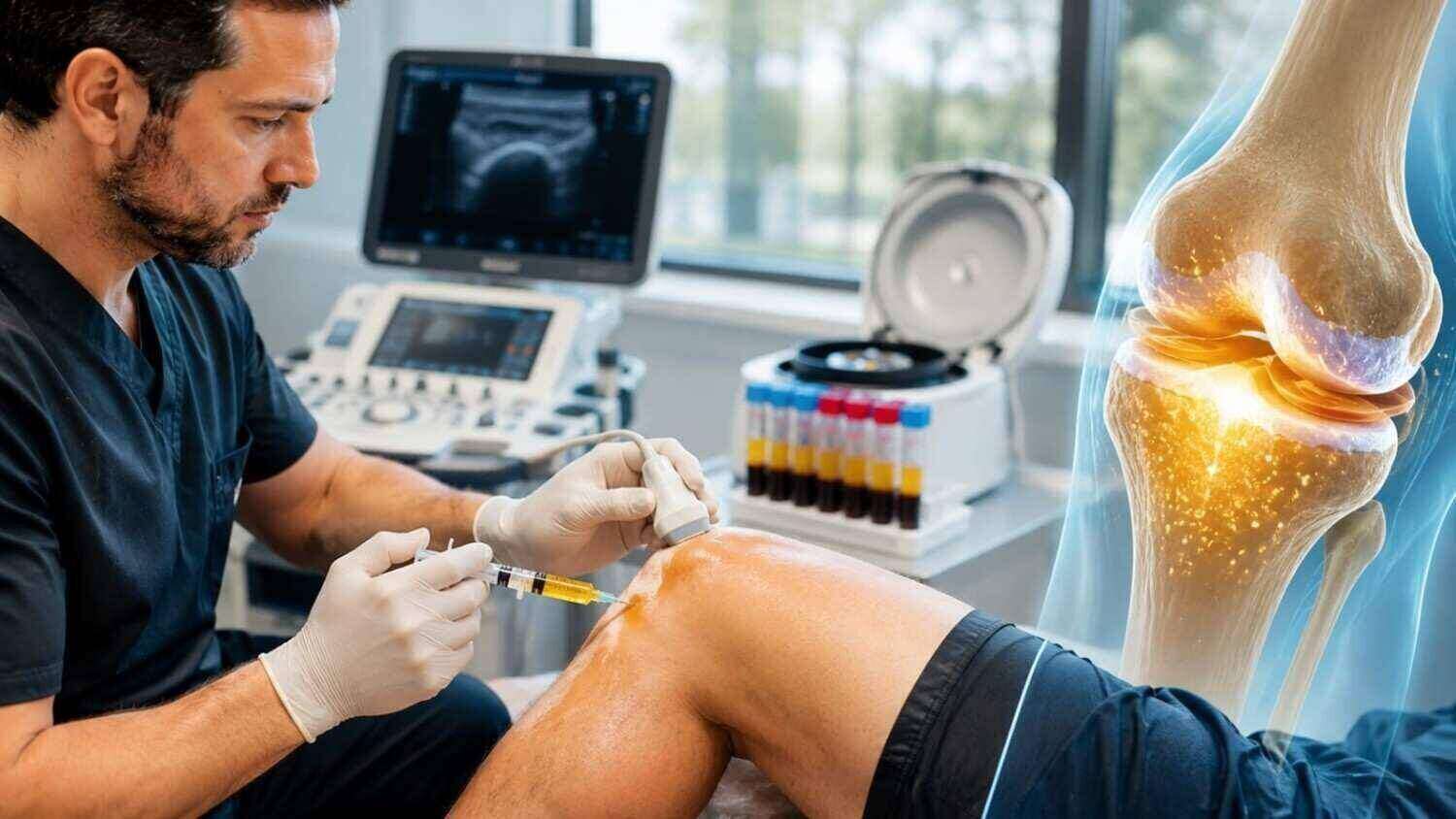
Platelet-rich plasma is derived from your own blood. A small sample is drawn, then spun in a centrifuge to concentrate the platelets — the cells responsible for clotting and releasing growth factors that signal tissue repair. The resulting plasma contains platelet concentrations roughly 5 to 10 times higher than normal blood, depending on the preparation system used.
Those concentrated platelets release proteins including platelet-derived growth factor (PDGF), transforming growth factor-beta (TGF-β), and vascular endothelial growth factor (VEGF). These signal your body to recruit stem cells, increase collagen production, and build new blood vessels in damaged tissue — the same biological cascade that heals a wound, but amplified and delivered precisely where you need it most.
According to research published through the National Institutes of Health, PRP's growth factor concentration plays a measurable role in soft tissue and cartilage repair, particularly in orthopedic applications. The evidence is strongest for tendinopathies, knee osteoarthritis, and rotator cuff injuries.
This is not a passive treatment. PRP actively recruits your body's own healing machinery — which is why many patients, including those who work physically demanding jobs in Laredo's oil and gas, logistics, and ranching industries, find it a compelling alternative to surgery or prolonged medication use.
Conditions That Respond Well to PRP Therapy
Not every painful condition is an ideal candidate for PRP, and a board-certified specialist will assess your imaging, history, and functional status before recommending it. That said, clinical evidence supports PRP therapy for a meaningful range of musculoskeletal conditions.
Knee Osteoarthritis
This is one of the most studied applications. A systematic review in the American Journal of Sports Medicine found that intra-articular PRP injections produced greater pain reduction and functional improvement compared to hyaluronic acid injections at six and twelve months. For patients who are not surgical candidates or who want to delay joint replacement, PRP represents a credible intermediate step.
Tendinopathies (Chronic Tendon Injuries)
Lateral epicondylitis (tennis elbow), Achilles tendinopathy, and patellar tendinopathy are conditions where tendons have failed to heal properly through normal inflammatory processes. PRP reintroduces a concentrated healing signal to tissue that has become chronically degenerative. Studies indicate that PRP outperforms corticosteroid injections for long-term tendon recovery, though corticosteroids may offer faster short-term relief.
Rotator Cuff and Shoulder Injuries
Partial-thickness rotator cuff tears and shoulder impingement syndromes are common among workers in physically demanding roles — including warehouse and logistics workers who make up a significant portion of Laredo's workforce. PRP injections into the subacromial space or directly into partial tears show promise for reducing pain and improving range of motion without surgery.
Plantar Fasciitis
Chronic heel pain from plantar fasciitis that hasn't responded to physical therapy or cortisone injections is another area where PRP shows clinical benefit. Research suggests a single PRP injection can produce durable relief over six to twelve months in patients with recalcitrant plantar fasciitis.
Spine and Disc Applications
For patients with facet joint degeneration or early disc disease, PRP is being studied as part of a broader regenerative approach. You can read more about how regenerative approaches are being applied to regenerative disc disease therapies — a related area where the science is actively evolving.
The PRP Procedure: What to Expect Step by Step
Understanding the process helps patients make informed decisions and reduces anxiety about what is, ultimately, a minimally invasive office procedure.
Step 1 — Blood Draw: A small volume of blood (typically 30–60 mL) is drawn from your arm, similar to a routine lab draw.
Step 2 — Centrifugation: The blood is placed in a centrifuge and spun at controlled speeds for approximately 8–15 minutes. This separates red blood cells from platelet-rich plasma.
Step 3 — Preparation: The concentrated PRP layer is extracted and prepared for injection. Some protocols activate the platelets with calcium chloride or thrombin before injection; others use unactivated PRP. The choice depends on the target tissue and clinical protocol.
Step 4 — Guided Injection: The PRP is injected into the target area — often under ultrasound guidance to ensure precision. For joints like the knee or shoulder, image guidance significantly improves accuracy and outcomes.
Step 5 — Recovery: Most patients experience mild soreness at the injection site for 2–5 days as the inflammatory healing response initiates. This is expected and part of the mechanism. Patients are typically advised to avoid anti-inflammatory medications (NSAIDs) for 2–4 weeks post-injection, as these can blunt the PRP response.
Total procedure time is generally 45–90 minutes including preparation. Most patients return to light activity within a few days and see progressive improvement over 4–8 weeks as tissue remodeling occurs.
PRP Compared to Other Common Pain Treatments
| Treatment | How It Works | Duration of Relief | Recovery Time | Best For |
|---|---|---|---|---|
| PRP Injection | Concentrated growth factors stimulate tissue repair | 6–18 months (varies by patient) | 2–5 days soreness | Tendinopathy, knee OA, partial tears |
| Corticosteroid Injection | Anti-inflammatory medication reduces swelling | 4–12 weeks | Minimal | Acute flares, bursitis |
| Hyaluronic Acid Injection | Lubricates and cushions joint space | 3–6 months | Minimal | Mild-to-moderate knee OA |
| Surgery | Structural repair or replacement | Long-term (procedure dependent) | Weeks to months | Severe structural damage |
| Physical Therapy | Strengthens supporting structures | Ongoing with maintenance | None | All stages, often combined with PRP |
Results vary by patient, condition severity, and overall health status. Dr. Memon will recommend the approach — or combination of approaches — that fits your specific clinical picture.
What the Evidence Says: Honest Expectations
PRP therapy is not a universal solution, and board-certified specialists are careful not to overstate outcomes. Here is what the research honestly shows:
Clinical evidence is strongest for knee osteoarthritis and lateral epicondylitis. The evidence is moderate and growing for rotator cuff, plantar fasciitis, and Achilles tendinopathy. Evidence for spinal applications is still emerging.
A 2021 review published via PubMed noted that variability in PRP preparation methods, platelet concentrations, and injection protocols makes direct comparison across studies difficult — which is why the expertise of the administering physician matters significantly. Outcomes are not uniform across all patients, and individual response depends on age, tissue health, platelet baseline counts, and the specific pathology being treated.
Most patients require 1–3 injections, spaced 4–6 weeks apart, before a meaningful assessment of response can be made. Some conditions respond to a single injection; others benefit from a series.
PRP is also increasingly used as part of a multimodal approach alongside physical therapy, nutritional support, and other non-opioid pain alternatives — particularly for patients who want to reduce or avoid opioid medications.
Why Board-Certified Expertise Matters for PRP in Laredo
PRP is not a procedure that should be administered without proper training, imaging capability, and a thorough diagnostic workup. The quality of the PRP preparation, the precision of injection placement, and the clinical judgment about patient selection all directly affect outcomes.
Dr. Rehan Memon brings 25+ years of board-certified experience in pain management and anesthesiology to every PRP consultation at Pain Management of Laredo. His background in interventional procedures means that PRP is delivered with the same precision and clinical rigor as more complex interventional treatments.
For Laredo patients — many of whom work in physically demanding industries and cannot afford extended surgical recovery periods — PRP offers a meaningful option. It fits within the broader framework of low-impact, evidence-based care that keeps people working and moving. Pair it with complementary approaches like low-impact rehabilitation methods for a more complete recovery strategy.
Webb County residents no longer need to travel hours to access this level of specialized regenerative care. It's available right here, on McPherson Road.
Frequently Asked Questions
Is PRP therapy covered by insurance in Laredo?
Most insurance plans, including Medicare and Medicaid, currently classify PRP as investigational for musculoskeletal conditions and do not cover it routinely. Coverage policies are evolving as more clinical data accumulates. Our team at Pain Management of Laredo can walk you through self-pay options and financing during your consultation.
How many PRP injections will I need?
This depends on the condition being treated and your individual response. Many patients see meaningful improvement after one to two injections. Chronic or more severe conditions may benefit from a series of two to three injections spaced four to six weeks apart. Dr. Memon will establish a treatment plan based on your imaging and clinical evaluation — not a one-size-fits-all protocol.
Can PRP be combined with other pain management treatments?
Yes, and it often produces better outcomes when it is. PRP is frequently combined with physical therapy, activity modification, and other interventional treatments. For patients managing complex pain conditions, Dr. Memon may incorporate PRP as one component of a broader, personalized care plan. Read more about how integrative approaches are used in integrative cancer pain relief contexts — the same principle of combining therapies applies across many pain conditions.
How soon will I feel results from PRP therapy?
Most patients do not feel immediate relief — and that is normal. Because PRP works by triggering a biological healing process, improvement typically begins at four to six weeks and continues through three to six months as tissue remodeling progresses. Some patients experience an initial flare of soreness in the first week before improvement begins.
Is PRP safe? Are there risks?
Because PRP is derived from your own blood, the risk of allergic reaction or disease transmission is essentially eliminated. The most common side effects are temporary soreness and mild swelling at the injection site. Infection risk is low but present with any injection procedure. Side effects are typically mild and temporary. Your provider will review all risks and benefits during your consultation.
Ready to Explore PRP Therapy in Laredo?
If chronic joint pain, tendon injuries, or musculoskeletal degeneration is limiting your quality of life, PRP therapy may be a meaningful option worth discussing with a specialist. At Pain Management of Laredo, Dr. Rehan Memon provides board-certified, evidence-based PRP consultations for patients throughout Laredo and Webb County.
Call us at +1 956-962-7173 or visit our clinic at 8511 McPherson Rd Ste. 204, Laredo, TX to schedule your consultation. Same-week appointments are often available, and we serve both English- and Spanish-speaking patients.
Medically reviewed by Dr. Rehan Memon, Board-certified pain specialist and anesthesiologist with 25+ years of experience
Interventional Pain Management Specialist at Pain Management of Laredo
Last reviewed: May 2026
This article is for informational purposes only and does not constitute medical advice. Please consult a qualified healthcare provider for diagnosis and treatment.