
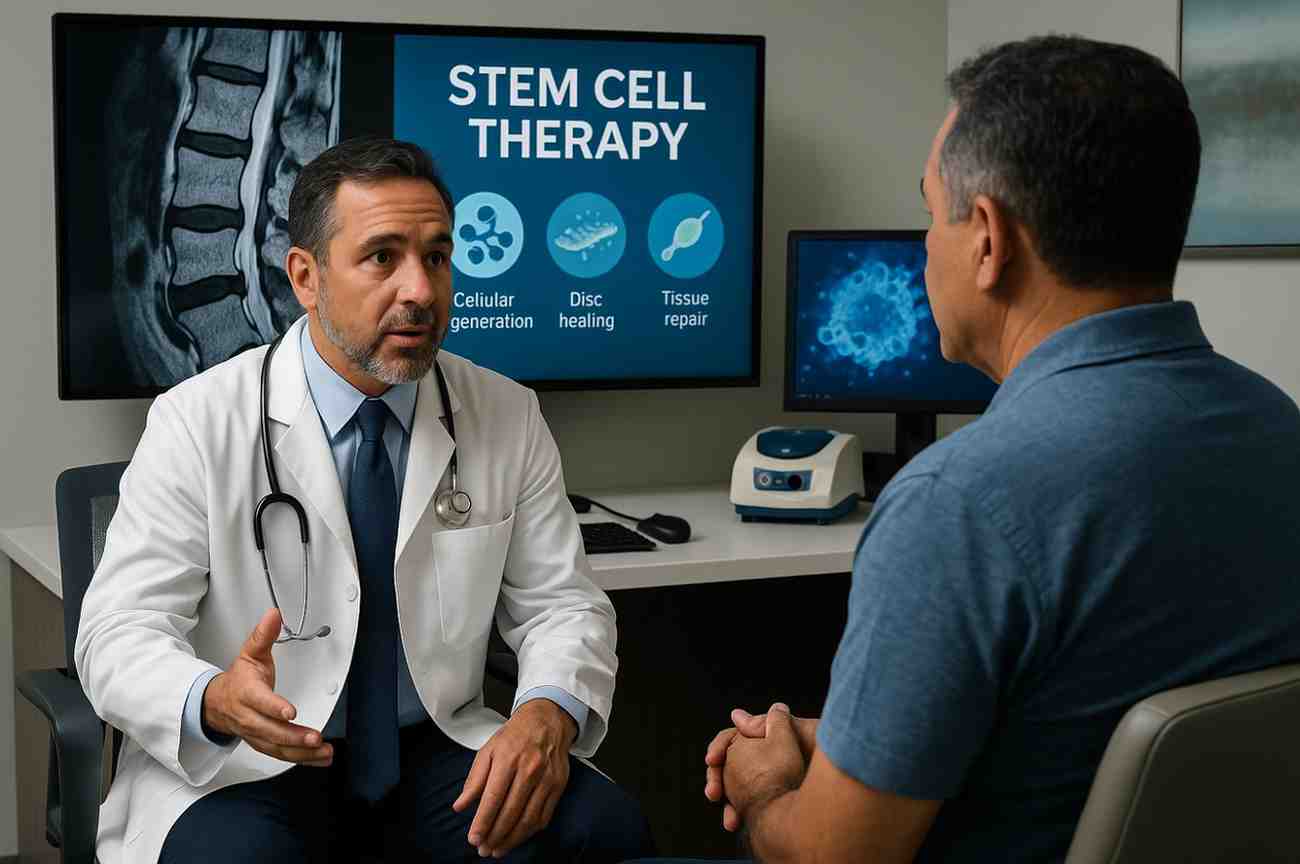
Stem Cell Therapy for Degenerative Disc Disease: Current Evidence
Stem Cell Therapy for Degenerative Disc Disease: Current Evidence
Lower back pain from degenerative disc disease affects millions of Americans, including many patients in Laredo, TX and Webb County. As intervertebral discs lose height, hydration, and structural integrity with age or injury, they cause chronic pain, nerve compression, and progressive disability. Traditional treatments—physical therapy, medications, injections, and ultimately spinal fusion surgery—address symptoms without regenerating damaged disc tissue. Stem cell therapy offers a fundamentally different approach: potentially rebuilding degenerated discs rather than merely managing pain. At Pain Management Laredo, we're closely monitoring stem cell research that may eventually transform degenerative disc disease from a progressive, inevitably worsening condition into one that can be reversed through regenerative medicine.
Understanding Degenerative Disc Disease
Intervertebral discs are complex structures that degenerate through multiple mechanisms:
Normal Disc Anatomy and Function
- Nucleus Pulposus: The gelatinous inner core composed of water, proteoglycans, and collagen, providing cushioning and shock absorption for the spine.
- Annulus Fibrosus: Concentric rings of fibrous tissue surrounding the nucleus, containing and protecting the inner disc while allowing controlled flexibility.
- Endplates: Cartilaginous layers separating discs from adjacent vertebral bodies, facilitating nutrient diffusion since adult discs are largely avascular (without blood supply).
- Biomechanical Function: Healthy discs distribute compressive forces, enable spinal flexibility, and maintain proper spacing between vertebrae protecting nerve roots.
- Cellular Components: Specialized disc cells (chondrocyte-like cells) maintain the extracellular matrix, balancing synthesis and breakdown of disc proteins.
Degenerative Cascade
- Age-Related Changes: Beginning in the 30s-40s for most individuals, discs gradually lose water content (proteoglycans that attract water decline), reducing shock absorption and increasing mechanical stress.
- Cellular Dysfunction: Disc cell numbers decrease while remaining cells become senescent (aging), producing less matrix and more inflammatory molecules that accelerate degeneration.
- Structural Breakdown: Annular tears develop from mechanical stress, nucleus protrudes through weakened annulus (herniation), and disc height progressively collapses.
- Inflammation: Degenerating disc tissue releases inflammatory cytokines causing local inflammation and pain, while disc material contacting nerves triggers intense inflammatory responses.
- Adjacent Segment Disease: As one disc degenerates, increased stress on neighboring discs accelerates their degeneration, creating progressive multi-level spinal problems.
- Nerve Compression: Loss of disc height narrows neural foramina (nerve exit passages), while disc herniations directly compress nerve roots, causing radicular pain (sciatica).
Limitations of Current Treatments
- Symptom Management Only: Medications, physical therapy, and epidural injections reduce pain but don't restore disc structure or halt progressive degeneration.
- Surgical Drawbacks: Spinal fusion eliminates motion at the fused segment, accelerates adjacent segment degeneration, and has significant failure rates requiring revision surgery.
- Disc Replacement Limitations: Artificial disc replacements preserve motion but are mechanical devices subject to wear, dislocation, and eventual failure without biologically regenerating tissue.
- Progressive Nature: Without regenerative intervention, degenerative disc disease inevitably worsens over time, with most treatments simply delaying surgical intervention.
Pain Management Laredo recognizes these limitations and follows regenerative medicine research, particularly stem cell therapy, that promises to actually reverse disc degeneration rather than just managing its consequences.
Stem Cell Biology and Disc Regeneration
Stem cells possess unique properties that make them promising for disc regeneration:
Types of Stem Cells for Disc Therapy
- Mesenchymal Stem Cells (MSCs): Adult stem cells derived from bone marrow, adipose tissue, or umbilical cord that can differentiate into disc-like cells and have anti-inflammatory and pro-regenerative properties—the most commonly used type for disc therapy.
- Bone Marrow-Derived MSCs: Harvested from patient's iliac crest (hip bone) or vertebral bodies, considered the gold standard with proven ability to differentiate into disc cells.
- Adipose-Derived MSCs: Stem cells isolated from fat tissue obtained through liposuction, more abundant and easier to harvest than bone marrow but possibly less potent for disc regeneration.
- Umbilical Cord MSCs: Allogeneic (donor) stem cells from umbilical cord tissue or Wharton's jelly, offering off-the-shelf availability without patient harvesting but raising immunological concerns.
- Induced Pluripotent Stem Cells (iPSCs): Patient cells reprogrammed to embryonic-like stem cell state, offering theoretically unlimited differentiation potential but still largely experimental for disc therapy.
Mechanisms of Therapeutic Action
- Cell Differentiation: Stem cells injected into degenerative discs differentiate into disc-like cells that produce collagen, proteoglycans, and other matrix proteins, rebuilding disc structure.
- Paracrine Effects: Perhaps more importantly, stem cells secrete growth factors, cytokines, and extracellular vesicles that stimulate resident disc cells to increase regenerative activity and decrease inflammation.
- Anti-Inflammatory Action: MSCs produce anti-inflammatory molecules (IL-10, TGF-beta) that reduce disc inflammation, decreasing pain and creating environment conducive to healing.
- Immunomodulation: Stem cells modulate immune responses, reducing the inflammatory cascade associated with disc degeneration and herniation.
- Matrix Synthesis Stimulation: Growth factors from stem cells activate surviving disc cells to produce more extracellular matrix proteins, rebuilding disc structure beyond what injected cells alone could achieve.
- Cell Survival Support: Stem cell-secreted factors help resident disc cells survive the harsh, low-oxygen, low-nutrient environment of degenerated discs.
Delivery Methods
- Intradiscal Injection: Direct injection of stem cells into the nucleus pulposus using fluoroscopy or CT guidance, similar to discography procedures—the most common delivery method.
- Cell Dose: Studies typically use 1-100 million cells per disc, with optimal dosing still under investigation.
- Carrier Materials: Some protocols inject stem cells in cell culture medium alone, while others use hydrogels, fibrin glue, or other carriers to retain cells within the disc.
- Autologous vs. Allogeneic: Autologous (patient's own cells) eliminates rejection risk but requires harvesting; allogeneic (donor cells) provides off-the-shelf availability but may trigger immune responses.
- Cell Preparation: Stem cells may be used immediately after harvest (minimal manipulation) or cultured to expand cell numbers before injection (requiring specialized laboratory facilities).
Clinical Evidence from Human Trials
Multiple clinical studies have evaluated stem cell therapy for degenerative disc disease with varying results:
Published Clinical Trials
- Early Safety Studies (Phase I): Initial trials in the 2010s established that intradiscal stem cell injection is safe with minimal complications, good tolerance, and no serious adverse events related to stem cell therapy itself.
- Autologous MSC Studies: Multiple trials using patients' own bone marrow stem cells showed pain reduction in 50-70% of treated patients, with improvements in function and quality of life persisting 1-2 years.
- Adipose-Derived Stem Cell Trials: Research using fat-derived stem cells demonstrated pain improvement in approximately 60% of patients with early-stage disc degeneration, less effective in severely degenerated discs.
- Allogeneic Stem Cell Studies: Trials using donor stem cells (particularly umbilical cord-derived) showed comparable pain relief to autologous approaches without requiring patient cell harvesting, though some patients developed antibodies against donor cells.
- Dose-Response Studies: Research investigating different cell doses suggesting higher doses (10-30 million cells) may be more effective than lower doses, though findings remain mixed.
Efficacy Outcomes
- Pain Reduction: Meta-analyses of published trials show average pain reduction of 20-40% on Visual Analog Scale at 6-12 months post-treatment, with some patients experiencing greater improvements and others minimal benefit.
- Functional Improvement: Studies report modest improvements in disability scores (Oswestry Disability Index) averaging 10-20 point reductions, translating to meaningful functional gains for daily activities.
- Disc Height Changes: MRI studies show inconsistent results—some report modest disc height increases or maintenance, while others show continued degeneration despite symptom improvement, suggesting clinical benefits may not require structural regeneration.
- Duration of Benefit: Most studies show effects persisting 1-2 years, with longer-term data (3-5 years) limited but suggesting gradual diminution of benefits in some patients while others maintain improvements.
- Responder Analysis: Approximately 50-70% of patients achieve meaningful pain relief (≥30% reduction), while 30-50% show minimal response, with predictors of response still being investigated.
Comparison to Standard Treatments
- Versus Conservative Care: Limited head-to-head trials suggest stem cell therapy may provide superior pain relief compared to continued conservative management (physical therapy, medications) in appropriately selected patients.
- Versus Epidural Steroids: Some evidence suggests longer-lasting benefits from stem cell therapy compared to epidural steroid injections, though direct comparisons are limited.
- Versus Surgery: No published randomized trials comparing stem cell therapy to spinal fusion or disc replacement, making relative efficacy uncertain—an important knowledge gap.
- Safety Profile: Stem cell therapy shows better safety profile than surgery with significantly lower complication rates, though long-term safety data beyond 5 years remain limited.
Current Limitations and Challenges
Despite promise, stem cell therapy for disc disease faces substantial obstacles:
Scientific Uncertainties
- Inconsistent Results: Wide variation in outcomes between studies and between patients, suggesting optimal protocols, patient selection, and cell preparation methods remain unclear.
- Mechanism Uncertainty: Debate continues whether benefits result from cell engraftment and differentiation, paracrine factors, or simply anti-inflammatory effects—understanding mechanisms would enable optimization.
- Cell Survival: Evidence suggests most injected stem cells don't survive long in the harsh disc environment; improving survival might enhance efficacy.
- Optimal Cell Type: Insufficient data to determine whether bone marrow, adipose, or umbilical cord stem cells are superior for disc regeneration.
- Dose and Protocol: Optimal cell dose, injection technique, carrier materials, and whether repeat injections improve outcomes remain under investigation.
Clinical Trial Quality Issues
- Small Sample Sizes: Most published trials enrolled 10-50 patients, insufficient to detect modest treatment effects or identify predictors of response.
- Lack of Controls: Many studies were uncontrolled case series; even "controlled" trials often compared stem cells to no treatment rather than active comparators, making placebo effects difficult to assess.
- Publication Bias: Suspicion that negative trials may not be published, creating literature biased toward positive results and overestimating efficacy.
- Heterogeneous Populations: Studies enrolled mixed patient populations (different degeneration severity, single vs. multi-level disease, with vs. without herniation) making it difficult to identify which patients benefit most.
- Limited Follow-Up: Most trials report 1-2 year outcomes; longer-term data assessing durability of benefits and safety are critically needed.
Regulatory and Access Issues
- FDA Status: No stem cell product is FDA-approved for degenerative disc disease; all current treatments in the US are either in clinical trials or provided as "same-day" procedures using minimally manipulated autologous cells under regulatory gray zones.
- Insurance Coverage: Stem cell therapy for disc disease is considered experimental by most insurers, requiring patients to pay out-of-pocket costs often ranging $5,000-$10,000+ per treatment.
- Clinic Variability: Hundreds of clinics offer stem cell therapy with widely varying protocols, cell preparation methods, practitioner expertise, and quality control—making outcomes highly variable and unpredictable.
- Marketing Concerns: Some clinics make exaggerated efficacy claims unsupported by evidence, exploit desperate patients, and charge premium prices for unproven treatments.
- Quality Control: No standardized requirements for cell viability, purity, sterility testing, or quality assurance create safety concerns and contribute to inconsistent outcomes.
Applications for Laredo Patients
Stem cell therapy may eventually benefit certain Webb County patients with degenerative disc disease:
Potential Candidate Characteristics
- Early to Moderate Degeneration: Evidence suggests best results in discs with some remaining healthy tissue; severely collapsed "black discs" on MRI may be beyond regenerative capacity.
- Single or Two-Level Disease: Most studies enrolled patients with limited disc involvement; extensive multi-level degeneration may not be amenable to stem cell therapy.
- Persistent Pain Despite Conservative Care: Appropriate for patients who've exhausted physical therapy, medications, and injections but want to avoid or delay surgery.
- Surgical Candidates: Patients offered fusion or disc replacement might consider stem cell therapy as less invasive alternative, though comparative efficacy data are limited.
- Younger Patients: Individuals in their 30s-50s with degenerative disc disease might particularly benefit from regenerative approach potentially avoiding lifetime of pain or early surgical intervention.
Poor Candidate Characteristics
- Severe Degeneration: Discs with complete collapse, extensive endplate changes, or near-total loss of nucleus may lack sufficient remaining cells to respond to stem cell therapy.
- Spinal Instability: Significant spondylolisthesis (vertebral slippage) or mechanical instability likely require surgical stabilization rather than regenerative approaches.
- Active Infection: Any spinal infection is absolute contraindication to stem cell injection.
- Tumor or Malignancy: Theoretical concerns about stem cells promoting tumor growth make cancer history a contraindication at most centers.
- Unrealistic Expectations: Patients expecting complete pain elimination or dramatic disc regeneration visible on MRI may be disappointed by modest improvements typical of current stem cell approaches.
Future Directions and Research
Ongoing research aims to enhance stem cell therapy efficacy and define its role in treating degenerative disc disease:
Enhanced Cell Therapies
- Genetically Modified Stem Cells: Engineering stem cells to overexpress growth factors or anti-inflammatory molecules potentially enhancing regenerative capacity.
- Cell Priming: Pre-treating stem cells with growth factors, hypoxia, or other conditions before injection to enhance survival and activity in the harsh disc environment.
- Cell Combinations: Mixing stem cells with mature disc cells or other cell types creating synergistic regenerative effects.
- Exosome Therapy: Using extracellular vesicles secreted by stem cells rather than whole cells, potentially providing regenerative benefits without cell transplantation challenges.
Biomaterial Innovations
- Injectable Hydrogels: Developing carriers that retain injected cells within discs, protect them from harsh environment, and provide structural support mimicking healthy nucleus pulposus.
- Growth Factor Delivery: Combining stem cells with growth factors (GDF-5, BMP-7, TGF-beta) that enhance disc regeneration.
- Annular Repair Materials: Developing sealants or grafts to repair annular tears, preventing nucleus extrusion and creating favorable environment for regeneration.
- Tissue Engineering: Laboratory-grown disc tissue combining stem cells with biocompatible scaffolds potentially enabling replacement of severely degenerated discs.
Clinical Research Priorities
- Large Randomized Trials: Multi-center trials with hundreds of patients comparing stem cell therapy to sham procedures, conservative care, and surgical interventions.
- Predictive Biomarkers: Identifying patient characteristics, imaging features, or molecular markers predicting who will respond to stem cell therapy.
- Optimal Protocols: Comparing different cell sources, doses, delivery methods, and adjunct treatments to determine best practices.
- Long-Term Outcomes: Studies following patients 5-10+ years assessing durability of benefits, need for repeat treatments, and ultimate progression to surgery.
- Combination Approaches: Investigating stem cell therapy combined with physical therapy, PRP injections, or other treatments for synergistic benefits.
Pain Management Laredo's Approach
Our perspective on stem cell therapy for degenerative disc disease balances promise with current evidence limitations:
Current Recommendations
- Evidence-Based Counseling: We provide Laredo patients with balanced information about stem cell therapy—current evidence shows modest benefits for some patients but remains experimental without FDA approval.
- Appropriate Patient Selection: If patients pursue stem cell therapy, we help identify whether their disc disease characteristics suggest they might benefit based on published research.
- Clinic Evaluation: We guide patients in evaluating stem cell clinics, looking for those participating in registered clinical trials, using quality-controlled processes, and avoiding exaggerated marketing claims.
- Managing Expectations: We emphasize that stem cell therapy may provide moderate pain improvement but is unlikely to completely eliminate symptoms or dramatically reverse advanced degeneration.
- Continued Care: Whether patients pursue stem cell therapy or not, Pain Management Laredo continues providing comprehensive pain management with proven interventions.
When We Might Consider Referral
- Research Trial Participation: We support patient participation in well-designed clinical trials at academic medical centers advancing scientific understanding of stem cell therapy.
- Appropriate Candidates: Younger patients with early-moderate degeneration who've failed conservative care and seek alternatives to surgery might reasonably consider stem cell therapy at reputable centers.
- Informed Decision-Making: Patients making informed decisions after understanding experimental nature, costs, uncertain benefits, and alternative options deserve support in pursuing regenerative approaches.
- Comprehensive Planning: Stem cell therapy should be part of comprehensive treatment plan including continued physical therapy, weight management, ergonomic modifications, and pain management rather than isolated intervention.
Stem cell therapy for degenerative disc disease represents an exciting frontier in regenerative medicine with potential to fundamentally change how we treat chronic back pain. Current evidence shows promise but also substantial limitations—stem cell therapy is not ready for widespread clinical use but warrants continued research and may benefit carefully selected patients willing to accept experimental status and out-of-pocket costs.
For Laredo patients suffering from degenerative disc disease, Pain Management Laredo offers comprehensive evaluation and treatment with proven interventions—physical therapy, medications, epidural steroid injections, radiofrequency ablation, and when appropriate, surgical consultation. We stay current on emerging regenerative medicine approaches including stem cell therapy and will incorporate these innovations into practice when evidence supports efficacy and safety.
If you're experiencing chronic back pain from degenerative disc disease in Laredo and want to explore all treatment options—from proven interventions to emerging regenerative approaches—contact Pain Management Laredo for a comprehensive evaluation. We provide evidence-based care combined with forward-looking awareness of innovations that may transform pain management in the coming years.