
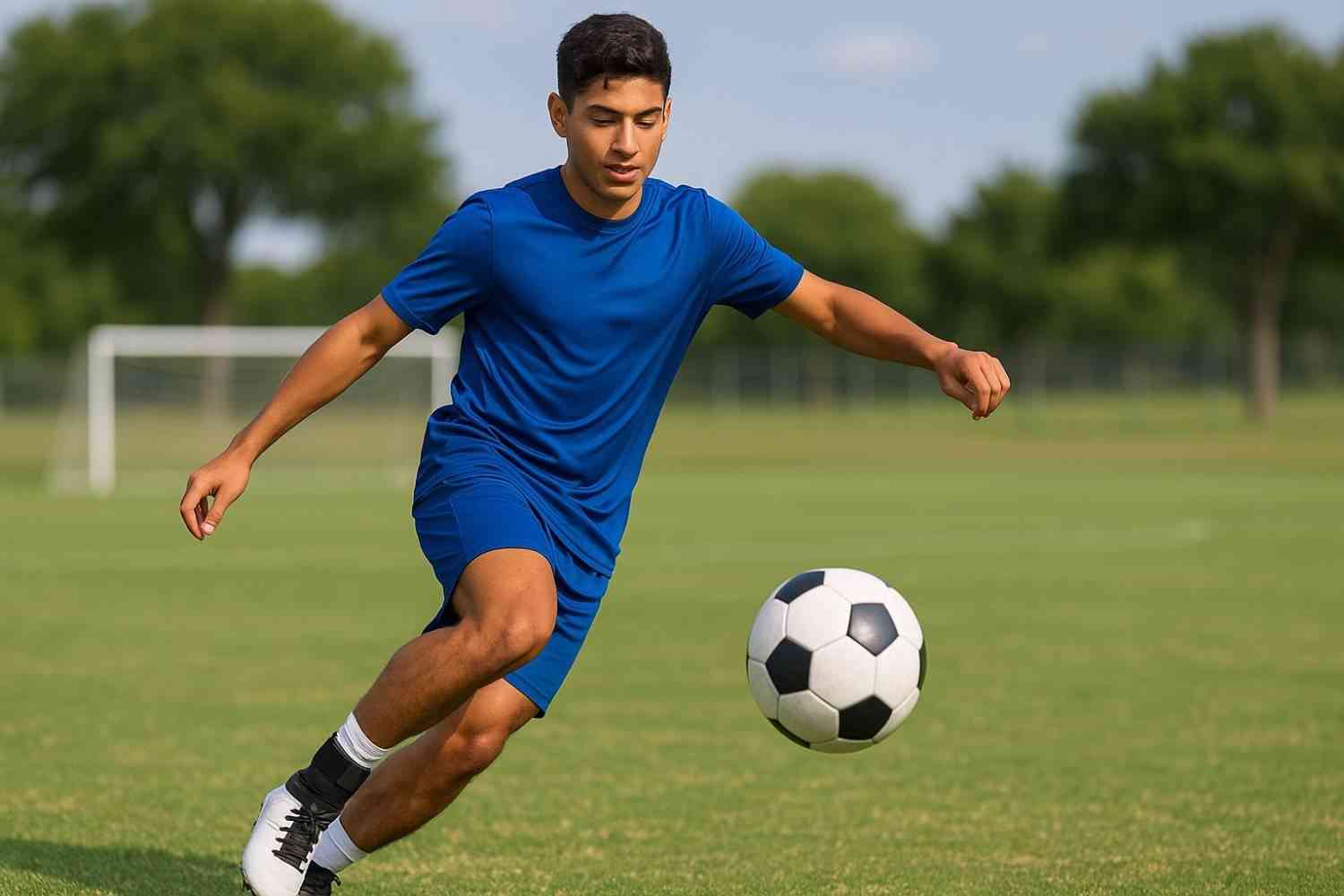
Teen Athlete's Battle with CRPS: Early Intervention Success Story
Marcus's Story: Reclaiming His Athletic Future in Laredo
Marcus Garcia, a 16-year-old sophomore soccer player at a high school in central Laredo, suffered what should have been a minor ankle injury during a district playoff game in Webb County three years ago. What began as straightforward ankle ligament damage evolved into Complex Regional Pain Syndrome (CRPS)—a devastating condition that can permanently disable adolescent athletes if not recognized and treated aggressively early. Marcus's story illustrates both the dangers of delayed CRPS diagnosis in young patients and the remarkable recovery possible when early intervention combines specialized expertise with intensive rehabilitation.
"I wasn't prepared to lose soccer," Marcus recalls, speaking candidly about the emotional weight of his injury during our conversation at his home in south Laredo. "In our Hispanic culture in South Texas, being an athlete meant something—it meant college possibilities, it meant honor for my family. When CRPS threatened to take that away, everything felt impossible." His experience resonates with many adolescents in Laredo and Webb County who identify deeply with athletic pursuits and face the psychological trauma when injury interferes with that identity.
The Initial Injury and Misleading Early Course
The Ankle Ligament Injury
Marcus's injury occurred during the first half of a crucial playoff match at a soccer field in central Laredo. "I planted my foot awkwardly during a turn," he recalls. "I felt a pop and immediate pain in my ankle, but I thought maybe I could walk it off." He was removed from the game and taken to an urgent care clinic in Laredo where radiographs revealed a severe ankle ligament sprain affecting his anterior talofibular and calcaneofibular ligaments—significant but generally manageable injuries for a teenage athlete.
"The urgent care doctor said I'd be back playing soccer in six to eight weeks," Marcus's mother, Juanita, recalls. "We were told it was a standard sports injury. Nothing prepared us for what actually happened."
The First Red Flag: Disproportionate Pain and Swelling
In the days following his ankle injury, Marcus developed symptoms that seemed excessive compared to his clinical findings. Rather than the gradually improving pain typical of ankle ligament injuries, Marcus experienced escalating pain, dramatic swelling, and concerning color changes in his ankle and foot. "Within 72 hours of the injury, his entire foot was bright red and swollen to almost twice normal size," Juanita recalls. "The pain seemed completely out of proportion to a simple ankle sprain."
Marcus and his parents made the rounds through Laredo medical providers seeking explanation and relief:
- His primary care physician recommended ice, rest, and patience, predicting improvement in another week or two
- An orthopedic surgeon in Laredo confirmed ankle ligament injury and recommended immobilization and physical therapy, noting the swelling was "perhaps more than usual but not concerning"
- An urgent care visit three weeks after the initial injury found Marcus in increasing distress, but providers in Laredo attributed persistent swelling to inadequate mobilization
- By four weeks post-injury, Marcus's pain and swelling continued escalating, now involving his entire foot and lower leg, with concerning color changes including mottling and cyanosis
"By week four, Marcus could barely touch his foot to the ground without severe pain," Juanita remembers. "We were frustrated that nobody was taking this seriously in Laredo. Everyone kept saying ankle sprains got better, but this wasn't getting better."
The CRPS Diagnosis and Early Recognition in Webb County
Finding the Right Diagnosis
Marcus's breakthrough came when his pediatrician in Laredo—frustrated by the lack of improvement and concerned about his presentation—referred him to a specialist at a regional medical center in South Texas who had expertise in adolescent pain syndromes. "That doctor took one look at Marcus's foot and asked if anyone had mentioned CRPS," Juanita recalls. "We'd never even heard the term before."
CRPS, formerly known as Reflex Sympathetic Dystrophy, is a condition of the peripheral and central nervous systems characterized by disproportionate pain, autonomic dysfunction (manifesting as swelling, color changes, temperature changes), and progressive functional impairment. While CRPS is more common following major trauma, it can develop after relatively minor injuries—particularly in adolescents and young adults. "The hallmark of CRPS is that the pain and swelling are completely out of proportion to the initial injury," the specialist explained to Marcus and his family in South Texas. "That's what we're seeing here."
Diagnostic Confirmation and Understanding the Condition
CRPS diagnosis combines clinical criteria with supporting tests. Marcus underwent:
- Physical examination: Detailed sensory testing revealing allodynia (pain from normally non-painful stimuli like light touch); documented swelling and temperature asymmetry
- Three-phase bone scintigraphy: Imaging study showing characteristic patterns of increased uptake in early phases and decreased uptake in delayed phases, typical of CRPS in South Texas diagnostic centers
- Skin biopsy: Analysis showing reduced small-fiber nerve density in his affected foot, confirming underlying nervous system involvement
The diagnosis of CRPS in a 16-year-old athlete in Laredo would have been devastating without immediate action. "CRPS in adolescents can be particularly aggressive," the pain specialist at the regional center explained to Marcus's family. "The nervous system at his age is still plastic—still forming connections. If we don't intervene immediately and aggressively, those maladaptive pain pathways can become established, potentially permanent."
The specialist outlined a comprehensive, intensive approach that would require Marcus's full commitment and his family's support throughout South Texas and Laredo.
Intensive Early Intervention Protocol for Adolescent CRPS
Multidisciplinary Team Assembly and Goals
Rather than standard ankle injury rehabilitation, Marcus required intensive intervention specifically designed to interrupt the CRPS cascade before it became chronic and fixed. His treatment team included:
- Pain specialist in South Texas coordinating overall care and managing medications
- Physical therapist specializing in CRPS and pain neuroscience in Laredo
- Psychologist experienced with adolescent pain and CRPS
- Pediatrician coordinating overall health in his community
- Pain specialist in Laredo for ongoing management coordination
The treatment philosophy emphasized aggressive but graded reintegration of function rather than protection and immobilization. "The last thing we want to do with CRPS is protect the limb," the pain specialist explained. "That reinforces the nervous system's protective response. Instead, we use strategies that tell his nervous system 'this limb is safe, we can use it normally.'"
Physical Rehabilitation: Graded Motor Imagery and Progressive Loading
Central to Marcus's recovery was a specific physical therapy protocol for CRPS designed to retrain his nervous system while progressively restoring function. This differed fundamentally from standard ankle rehabilitation:
- Pain neuroscience education: Marcus learned detailed information about how his nervous system was misinterpreting his foot as dangerous and how the treatment aimed to correct that misinterpretation
- Graded motor imagery: Using workbook exercises where Marcus looked at pictures of feet and hands in various positions, then attempted to mentally visualize his own foot moving similarly, creating central nervous system pathways supporting normal movement
- Mirror therapy: Using a mirror to create visual feedback suggesting his affected foot was moving normally, a technique particularly effective in CRPS for reducing pain and restoring function
- Desensitization protocol: Systematic graduated exposure to touch and pressure on his foot, starting with soft fabrics and progressively advancing to normal textures, retraining his nervous system that touch wasn't dangerous
- Progressive weight-bearing: Careful graduated progression from non-weight-bearing to partial weight-bearing to full weight-bearing over weeks, allowing tissue adaptation while preventing pain spike responses
- Functional task training: Progressive training for specific activities—walking, stairs, eventually sporting movements—breaking complex tasks into components that could be built progressively
Marcus's physical therapy in Laredo occurred three to four times weekly for the first two months, then twice weekly for subsequent months. "It was intense," he recalls. "Some days the pain would increase during therapy, and it felt counterintuitive to keep pushing. But my therapist explained that was actually a sign my nervous system was learning."
Medication Management: Strategic Approach for Adolescents
Marcus's pain specialist in South Texas carefully selected medications specifically for their efficacy in CRPS while considering adolescent safety and side effect profiles. Rather than opioid focus typical in adult pain management, the approach emphasized agents with evidence in CRPS:
- Gabapentin: Titrated to effective doses specifically for neuropathic pain and central sensitization components of CRPS
- Non-steroidal anti-inflammatory agents: Used strategically during peak inflammation phases to reduce pain enough for physical therapy participation
- Topical agents: Including ketamine cream and lidocaine patches applied to his foot, providing localized pain relief without systemic effects
- Beta-blockers: Specifically for sympathetic hyperactivity components contributing to his autonomic symptoms (swelling, color changes, temperature dysregulation)
- Bisphosphonates: Controversial but showing some evidence in CRPS for reducing bone pain and potentially preventing progressive bone changes; carefully monitored in adolescent use
"The medication approach was completely different from what my first orthopedic surgeon suggested," Marcus notes. "Rather than pain pills as needed, my pain doctor had a specific strategy: use medications to reduce pain enough that I could engage in therapy, then gradually reduce medications as my nervous system healed."
Psychological Intervention and Adolescent Coping
The psychological component of Marcus's treatment addressed both the immediate trauma of his injury and condition and the long-term identity and coping issues that CRPS creates in young athletes. His work with a pain psychologist in South Texas included:
- Pain neuroscience education: Detailed explanation of how his nervous system had misinterpreted signals from his ankle injury, creating excessive protective responses
- Cognitive-behavioral strategies: Tools for identifying and modifying thought patterns that exacerbated pain and disability in Laredo
- Acceptance and commitment therapy: Working toward acceptance that his foot had CRPS while maintaining commitment to his valued activities and identity as an athlete
- Identity work: Exploring and expanding how Marcus understood himself beyond soccer, recognizing the temporary nature of his athletic limitations while maintaining his identity as a capable person
- Family involvement: Including his parents in therapy to help them understand CRPS and support Marcus without reinforcing protective behaviors
"My psychologist helped me understand that CRPS was a nervous system problem, not a character weakness," Marcus explains. "She also helped me handle the grief of potentially losing soccer, and she was right that it turned out to be temporary grief rather than permanent."
Recovery Trajectory: From Crisis to Athletic Return
First Three Months: Crisis Phase to Stability
The first three months of intensive treatment—occurring over the winter from December through February—represented the critical window when CRPS could become either reversible or chronic and progressive. Marcus's compliance was extraordinary. He attended physical therapy multiple times weekly, engaged in home exercises, practiced mirror therapy, and tolerated medications with adolescent resilience.
"By the end of the first month, Marcus's pain had decreased from 9/10 to about 7/10," his physical therapist in Laredo recalls. "More importantly, his fear about his foot decreased. He started believing recovery was possible." Over these first three months, Marcus progressed from non-weight-bearing status to walking with crutches to walking with a normal gait, with his swelling gradually decreasing and color normalization beginning.
Months Four Through Six: Progressive Functional Return
By spring, Marcus had progressed dramatically. His pain continued decreasing, his foot appearance normalized, and his psychological acceptance solidified. "By May, Marcus was walking normally, riding his bicycle, and doing activities he'd been unable to do months before," his Laredo physical therapist notes. Most remarkably, his relationship with his foot changed from fearful and protective to engaged and functional.
During this phase, physical therapy progressed to functional activities more directly related to athletics:
- Balance and proprioceptive training using dynamic balance exercises and sports-specific balance challenges
- Agility drills improving his ability to move side-to-side and change direction
- Sport-specific movements adapted from soccer: controlled kicks, directional changes, progressive intensity
- Gradual progression to sport-specific speeds and complexities
Remarkably, Marcus's pain had decreased to 2-3/10 by summer, and his medications had been reduced substantially from their peak doses.
Months Seven Through Twelve: Return to Sport
In his sophomore year (the fall of his continued recovery), Marcus began returning to soccer. "The return was gradual but steady," he recalls. "I started with team practice participation without games, then gradually increased my on-field involvement. By late fall, I was playing full matches."
His return-to-sport protocol was carefully structured to prevent exacerbation while maintaining his psychological confidence:
- Pre-activity preparation including warm-up routines designed for CRPS recovery
- Modified initial participation—limited minutes, specific positioning—gradually increasing toward full participation
- Post-activity recovery protocols including ice, compression, elevation, and anti-inflammatory measures
- Ongoing home exercises and preventive physical therapy even as he returned to full sport
"By his junior year, Marcus was playing soccer at a level approaching his pre-injury capability," his coach notes. "Most remarkably, he was psychologically in a completely different place—confident, not fearful, not limited by his previous injury."
Current Status: Life Three Years After CRPS Diagnosis
Athletic Performance and Identity
Now 19 and a senior in high school in Laredo, Marcus continues playing competitive soccer for his school in Webb County. "Soccer is still my passion," he states. "And I have perspective that people who never had a serious injury don't have. I appreciate my body and my capabilities more completely."
His athletic performance has returned to pre-injury levels and, by some measures, exceeded it. "I work harder on prevention and maintenance now," he explains. "I do the things my physical therapist taught me, I listen to my body, and I don't push through pain—I evaluate whether something is normal sports discomfort or a warning sign." His injury has actually made him a more mentally mature athlete, according to his coaches.
Ongoing Management and Prevention
Three years after his CRPS diagnosis, Marcus maintains a maintenance program designed to prevent recurrence:
- Monthly physical therapy sessions at his Laredo clinic focused on maintaining strength, proprioception, and neuromuscular control
- Home exercises performed 4-5 times weekly, emphasizing balance, strength, and proprioceptive training
- Medications discontinued—his pain has resolved completely, and he requires no ongoing pain medications
- Regular check-ups with his primary care physician in Laredo who monitors for any recurrence signs
- Psychological skills and coping strategies he learned integrated into his approach to stress and challenges throughout his life
"Sometimes I think about how close I came to permanent disability," Marcus reflects seriously. "If my diagnosis had been delayed another few months, if I hadn't had access to specialized CRPS treatment in South Texas, or if I hadn't been willing to do the intense rehabilitation in Laredo—everything could be different. That understanding makes me deeply grateful."
Key Insights for Young Athletes and Families in Laredo and Webb County
Marcus's remarkable recovery from adolescent CRPS offers critical lessons for young athletes in South Texas and their families who may face similar situations:
- Disproportionate pain and swelling warrant investigation: If pain and swelling seem excessive compared to the initial injury in Laredo or Webb County, seek specialist evaluation for conditions like CRPS rather than accepting "this is just how it heals"
- Early diagnosis is transformative: CRPS recognized and treated early in adolescence can often be reversed; CRPS allowed to progress for months or years often becomes chronic and disabling
- Standard injury protocols don't work for CRPS: Traditional "protect and immobilize" approaches worsen CRPS in Laredo; aggressive functional restoration approaches are necessary
- Specialized expertise matters profoundly: Providers familiar with CRPS recognize the characteristic presentation and know appropriate treatment approaches; generalist providers may delay diagnosis
- Intensive rehabilitation is demanding but effective: CRPS recovery requires commitment to frequent physical therapy, psychological work, and adherence to protocols—but this intensity correlates with better outcomes for young athletes
- Adolescent resilience is remarkable: Young people like Marcus often demonstrate greater neuroplasticity and recovery potential than older patients with the same conditions
- Psychological support is not optional: The emotional trauma of CRPS in young athletes requires professional psychological intervention, not just physical rehabilitation
- Complete recovery is possible: With early recognition and intensive treatment in Laredo and South Texas, many adolescents with CRPS achieve complete functional recovery, unlike older patients who may have residual limitations
For young athletes in Laredo and throughout Webb County facing serious sports injuries with disproportionate pain and swelling, and for their parents seeking guidance, Marcus's message is hopeful but urgent: "Don't accept doctors saying 'this just takes time.' If your pain seems out of proportion, push for specialist evaluation. CRPS is devastating, but it's treatable if you catch it early. I'm proof that you can recover completely and return to your sport. Get the right diagnosis, find specialists who understand CRPS, and commit to the intensive recovery work. Your athletic future may depend on it—mine did."