
Yoga for Back Pain: Poses to Avoid and Safe Modifications
Yoga for Back Pain: Poses to Avoid and Safe Modifications
At Pain Management Laredo, we frequently recommend yoga as a beneficial practice for many back pain sufferers. When practiced appropriately, yoga can improve flexibility, strengthen core muscles, enhance body awareness, and reduce stress—all factors that contribute to back pain relief. However, not all yoga poses are suitable for everyone with back pain, and some common postures can actually exacerbate certain conditions when performed incorrectly or without proper modifications. This comprehensive guide will help Laredo residents safely navigate yoga practice with back pain, identifying which poses to approach with caution and how to modify others for therapeutic benefit.
Understanding Your Back Pain Before Starting Yoga
Before discussing specific poses, it's essential to understand the nature of your back pain:
Common Back Pain Conditions and Yoga Considerations
- Herniated or Bulging Discs: Generally need to avoid forward bending, especially with a rounded spine, and deep twists. Extension (backbends) may be beneficial for some but problematic for others.
- Spinal Stenosis: Typically more comfortable in flexion (forward bending) and needs to avoid excessive extension (backbends) that can compress the spinal canal further.
- Spondylolisthesis: Requires particular attention to neutral spine positioning and core engagement, generally avoiding extreme ranges of motion in any direction.
- Sacroiliac Joint Dysfunction: Benefits from stability-focused practice with careful attention to maintaining even weight distribution across the pelvis, avoiding asymmetrical poses that strain the SI joint.
- Facet Joint Issues: Often uncomfortable with extension (backbends) and may require modified approaches to these postures.
- Muscular Back Pain: May benefit from gentle stretching but needs to avoid pushing into pain, with emphasis on relaxation techniques to reduce muscle guarding.
Importance of Professional Guidance
- Medical Clearance: Consult with your healthcare provider before beginning yoga, especially if you have acute or severe back pain, recent injuries, or neurological symptoms.
- Individualized Assessment: What works for one person with "back pain" may be problematic for another, as back pain has numerous potential causes with different biomechanical implications.
- Qualified Instruction: Seek instructors with specific training in therapeutic yoga, yoga for back pain, or those who have experience working with physical limitations.
- Progression Planning: Work with professionals to develop a progressive approach that safely advances your practice as your condition improves.
Understanding Pain Signals During Yoga
- Discomfort vs. Pain: Learn to distinguish between productive stretch sensations and potentially harmful pain. Sharp, shooting, or radiating pain is always a sign to stop.
- The 24-Hour Rule: Monitor how your back responds not just during practice but in the hours and day afterward. Increased pain that lasts more than a few hours suggests the need for modification.
- Consistency of Response: Notice if certain movements consistently trigger pain, which indicates the need to modify or avoid those specific movements.
- Pre-Existing Pain Fluctuations: Become aware of your typical pain patterns to better evaluate how yoga is affecting your condition rather than normal symptom fluctuations.
This foundational understanding will help you make informed decisions about which yoga practices are appropriate for your specific back condition.
Potentially Problematic Poses: When to Use Caution
Certain yoga poses can stress vulnerable back structures and should be approached cautiously:
Forward Bends to Modify or Avoid
- Standing Forward Fold (Uttanasana): Places significant pressure on intervertebral discs, especially when performed with a rounded spine. Particularly problematic for herniated discs and flexion-sensitive conditions.
- Seated Forward Bend (Paschimottanasana): Creates even more disc pressure than standing versions due to the anchored pelvis and potential for hamstring tightness to pull on the low back.
- Head-to-Knee Pose (Janu Sirsasana): The asymmetrical nature can stress the SI joint and low back if performed without proper alignment.
- Plow Pose (Halasana): Extreme cervical flexion combined with weight-bearing can compromise cervical discs and nerves.
Backbends to Approach Carefully
- Wheel Pose (Urdhva Dhanurasana): Creates extreme extension that can compress facet joints and spinal nerve roots, particularly problematic for spinal stenosis and extension-sensitive conditions.
- Upward Facing Dog (Urdhva Mukha Svanasana): Can create shear forces at the lumbosacral junction if performed without proper abdominal support.
- Camel Pose (Ustrasana): The significant lumbar extension combined with an open anterior chest can compress posterior elements of the spine.
- Cobra Pose (Bhujangasana): Particularly when performed with arm strength rather than back muscles, can create excessive localized pressure in the lumbar spine.
Twists That May Stress the Spine
- Seated Spinal Twist (Marichyasana III): Deep rotation can stress the discs and facet joints, especially if forcing the twist with leverage from the arms.
- Revolved Triangle (Parivrtta Trikonasana): Combines forward bending with twisting, which increases disc pressure while in a vulnerable position.
- Revolved Side Angle (Parivrtta Parsvakonasana): The combination of twisting while in a lunge position can stress both the SI joint and lumbar spine.
Inversions with Back Pain Considerations
- Headstand (Sirsasana): Places significant compression on cervical vertebrae and requires substantial core strength to maintain proper spinal alignment.
- Shoulderstand (Sarvangasana): Creates extreme cervical flexion under load, which can be problematic for cervical disc issues.
- Handstand (Adho Mukha Vrksasana): The instability and potential for falling can trigger protective muscle spasms in those with back pain.
These poses are not necessarily off-limits for everyone with back pain, but they require careful consideration, proper instruction, and often significant modification based on your specific condition.
Safe Modifications for Common Yoga Poses
Many yoga poses can be adapted to make them accessible and beneficial:
Modified Forward Bends
- Standing Forward Bend Adaptations:
- Bend knees generously to reduce hamstring pull on the pelvis
- Place hands on blocks, chair, or thighs rather than reaching for the floor
- Focus on hinging from hips with a long spine rather than rounding
- Half forward fold with spine parallel to floor rather than full fold
- Seated Forward Bend Alternatives:
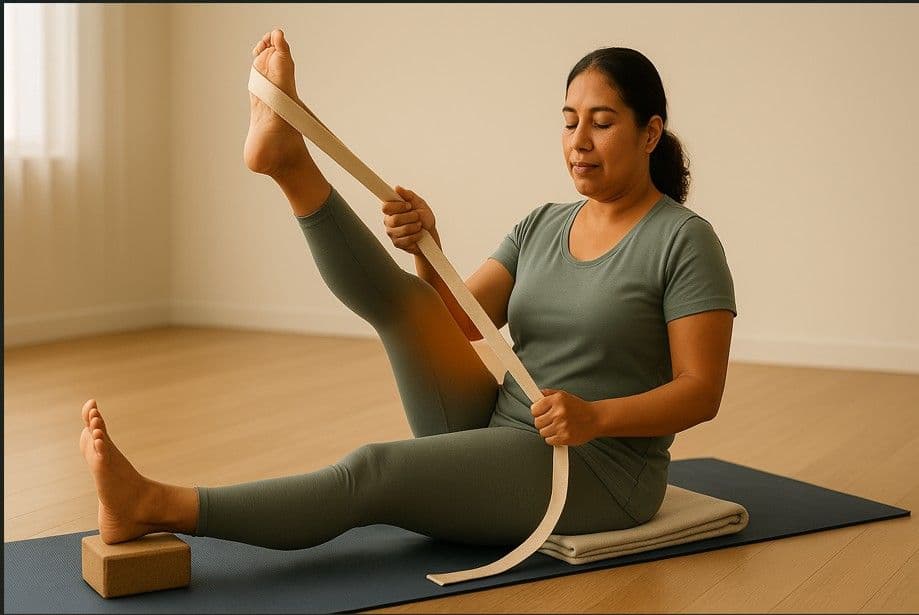
- Sit on a folded blanket or cushion to facilitate forward rotation of the pelvis
- Maintain a flat back rather than rounding toward legs
- Use a strap around feet to avoid straining to reach toes
- Focus on lengthening the spine forward rather than folding downward
Safer Backbend Approaches
- Gentle Backbend Alternatives:
- Sphinx pose (low elbow-supported backbend) instead of cobra or upward dog
- Bridge pose with controlled range of motion rather than wheel pose
- Supported backbends using bolsters or yoga therapy chairs
- Focusing on upper back extension rather than lumbar extension
- Core Integration for Backbends:
- Engage abdominal muscles throughout backbends to support the spine
- Maintain length in the lower back rather than compressing it
- Use breath to create space and decompress the spine
- Practice the "10% less" rule—go to 90% of your potential range
Modified Twisting Techniques
- Supine Twist Variations:
- Keep both shoulders on the floor during reclined twists
- Use bent knees rather than straight legs to reduce leverage
- Place a bolster or blanket under knees for support
- Focus on the "wringing out" sensation rather than maximum rotation
- Standing Twist Modifications:
- Initiate twists from the mid-back rather than forcing with arms
- Keep the spine long and avoid combining twisting with deep forward bending
- Use walls or chairs for support in balance-challenging twists
- Focus on rotating the ribcage while maintaining stable hips and lower back
Alternative Inversion Approaches
- Gentle Inversion Options:
- Legs up the wall pose (Viparita Karani) for inversion benefits without neck strain
- Supported bridge pose with a block under the sacrum
- Downward facing dog with proper alignment and bent knees if needed
- Half handstand with feet on wall and proper shoulder alignment
These modifications make yoga more accessible while still providing therapeutic benefits for those with back pain in Laredo.
Beneficial Poses for Common Back Conditions
Certain poses are particularly therapeutic for specific back conditions:
For Disc-Related Back Pain
- Cat-Cow Variations: Gentle movement between spinal flexion and extension promotes disc hydration and nutrition while avoiding extremes of range.
- Modified Cobra: Very gentle backbending using primarily core strength rather than arm pushing can help promote the natural lumbar curve without compression.
- Supine Hamstring Stretch: Lying on back with a strap around one foot at a time helps release hamstring tension that can pull on the pelvis and stress discs.
- Wall Plank: Standing facing a wall with hands on wall at shoulder height, creating a mild, supported backbend that decompresses the anterior portion of the discs.
For Spinal Stenosis
- Child's Pose: Creates space between vertebrae and gently stretches the lower back in flexion, which typically relieves stenosis symptoms.
- Happy Baby Pose: Opens the hips while maintaining a flexed spine position that creates space in the spinal canal.
- Knees-to-Chest: Gently pulling knees toward chest while lying on back creates space in the facet joints and decompresses the spine.
- Seated Forward Folds: When performed with proper support and a long spine, can be comfortable for stenosis by creating spinal flexion.
For SI Joint Dysfunction
- Bridge Pose with Block: Placing a block between the thighs and squeezing gently provides stability to the pelvis during this strengthening pose.
- Modified Triangle: Using a higher hand position (on block or shin) and focusing on even weight distribution across both feet helps maintain SI joint stability.
- Warrior II with Alignment Focus: Emphasizing proper alignment of knee over ankle and even weight distribution trains proprioception and stability.
- Gentle Figure-4 Stretch: Supine position with ankle crossed over opposite knee, when done with proper pelvic alignment, can relieve SI joint tension.
Core Strengthening and Breath Practices
A strong core and proper breathing are essential for back pain management:
Safe Core Strengthening Poses
- Bird Dog: Quadruped position with opposite arm and leg extensions, building cross-body stability while maintaining neutral spine.
- Modified Plank Series: Including knee-down planks, wall planks, and short-hold variations that build core endurance without strain.
- Boat Pose Variations: Using bent knees, support under the legs, or pulsing movements rather than long holds in full expression.
- Bridge Pose with Awareness: Focusing on using gluteal and core muscles rather than pushing from the feet or arching the back excessively.
Breath Practices for Back Pain Relief
- Diaphragmatic Breathing: Deep belly breathing that engages the diaphragm fully, helping to release tension in the psoas and lower back muscles.
- Extended Exhale Breathing: Making the exhale 1.5-2 times longer than the inhale to activate the parasympathetic nervous system and reduce pain perception.
- Lateral Rib Expansion: Emphasizing the sideways movement of the ribs to improve mobility in the costovertebral joints.
- Pain-Sensation Breathing: Observing pain sensations with neutral attention while maintaining steady breath, helping to reduce the emotional amplification of pain.
Creating a Safe Home Practice
Developing an appropriate self-practice routine for back pain:
Essential Props for Back Care Yoga
- Firm Blankets: For support under hips in seated poses, cushioning under knees, or rolled support for neck and lumbar curve.
- Yoga Blocks: To bring the floor "higher" in standing poses, support under hands in forward bends, or provide stability in twists.
- Yoga Strap: For extending reach without straining, maintaining alignment in leg stretches, or creating controlled traction.
- Bolster or Firm Cushions: For supported backbends, restorative poses, or elevating the hips in seated practice.
- Stable Chair: For modified standing poses, supported twists, or as a safety aid for balance poses.
Sample Gentle Back Care Sequence
- Beginning Practice: Constructive rest position, gentle knee-to-chest holds, supine pelvic tilts, gentle supine twists
- Gentle Warming: Cat-cow, thread-the-needle, modified child's pose, mountain pose with awareness
- Mindful Movement: Modified warrior poses, gentle standing side bends, supported triangle variations
- Core Integration: Bird dog variations, bridge pose with block, modified boat pose
- Gentle Release: Supported reclining bound angle pose, legs up the wall, supported savasana
Finding Qualified Instruction in Laredo
Guidance for connecting with appropriate yoga resources:
What to Look for in an Instructor
- Specialized Training: Beyond basic yoga certification, look for additional training in yoga therapy, yoga for back pain, or therapeutic applications.
- Experience with Injuries: Instructors who have worked with medical professionals or have experience modifying for various conditions.
- Teaching Style: Emphasis on alignment, individual modification, and proper use of props rather than pushing to achieve "perfect" poses.
- Communication Approach: Instructors who ask about injuries, offer alternatives, and create a non-competitive atmosphere.
Red Flags to Watch For
- Teachers who push students to "work through pain" or view pain as "weakness leaving the body"
- Classes that don't offer modifications or prop options for different ability levels
- Instructors who make medical claims about yoga "curing" specific conditions
- Competitive environments where advanced poses are highlighted without proper preparation
Conclusion: Yoga as a Tool for Back Pain Self-Management
At Pain Management Laredo, we view appropriately modified yoga as a powerful component in a comprehensive back pain management strategy. By understanding which poses to approach with caution, how to modify effectively, and how to build a practice tailored to your specific condition, yoga can become an empowering tool for taking control of your back health.
Remember that the goal of yoga for back pain isn't achieving perfect poses or extreme flexibility, but rather creating functional strength, appropriate mobility, body awareness, and stress reduction—all factors that contribute to reduced pain and improved quality of life. The most beneficial practice is one that you can maintain consistently, that respects your body's current limitations, and that progressively builds capacity without triggering pain flares.
We encourage Laredo residents dealing with back pain to explore yoga with proper guidance, patience, and attention to their body's responses. When practiced with knowledge and mindfulness, yoga can be not just safe but truly therapeutic for many back pain conditions, offering both immediate relief and long-term benefits for spinal health.